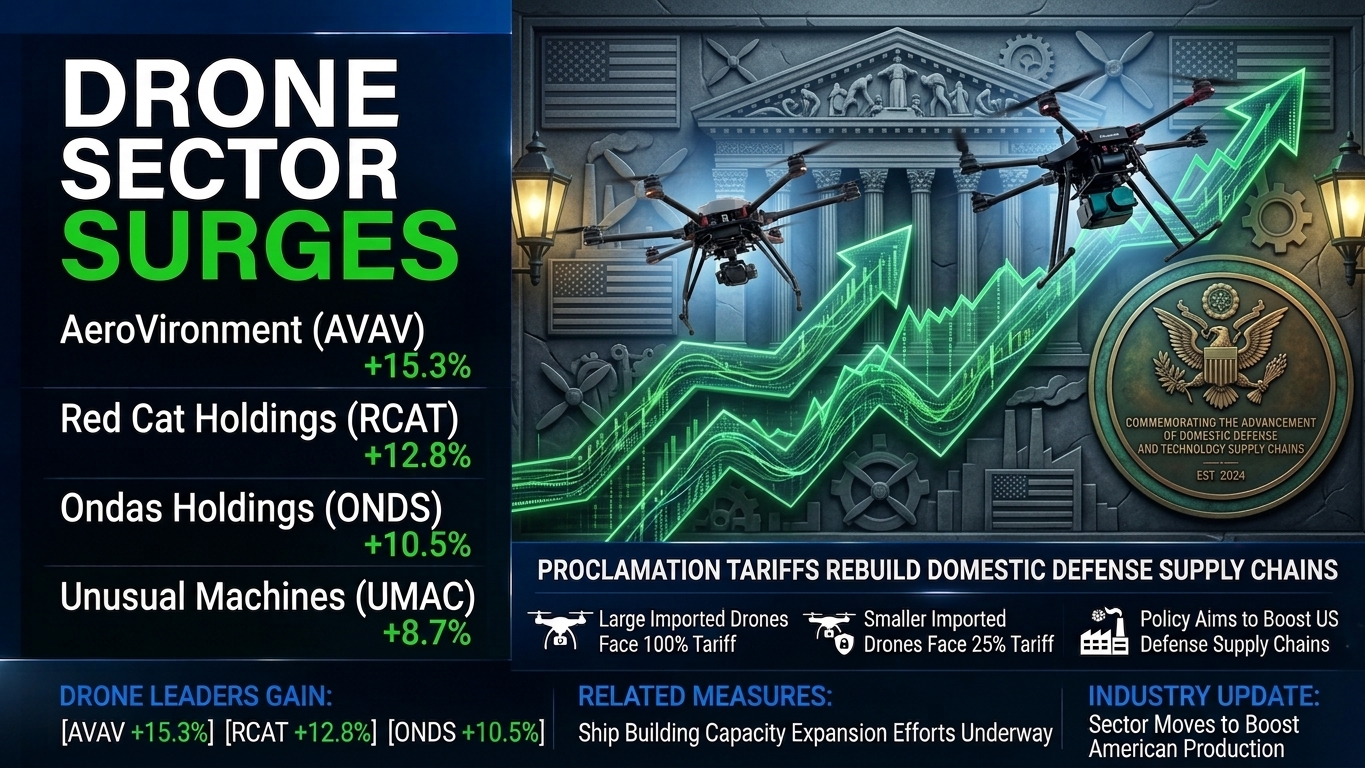
President Trump signed a proclamation Thursday imposing steep new tariffs on imported drones, a move the White House said is intended to bolster national security and strengthen domestic supply chains. The order sets a 100% ad valorem tariff on drones above a certain size or with certain capabilities considered particularly sensitive from a national-security standpoint, and a 25% tariff on smaller drones.
Shares of U.S.-based drone manufacturers rallied on the news. AeroVironment, Red Cat Holdings, Ondas Holdings, Unusual Machines and Draganfly all traded higher as investors bet the tariffs will redirect military and commercial demand toward domestic suppliers and away from foreign, largely Chinese-made drones that have long dominated global market share.
The tariff proclamation was paired with broader defense-industrial policy moves, including efforts framed by the administration as part of a push to rebuild the U.S. Navy and expand America's shipbuilding industrial base. Shares of Huntington Ingalls Industries, the country's largest military shipbuilder, were also in focus as investors weighed the read-through for the broader defense-industrial buildout.
Analysts said the tariffs address a long-standing vulnerability in U.S. drone supply chains, which have relied heavily on foreign components even for systems used by domestic militaries and government agencies. Restricting cheaper foreign alternatives could accelerate contract awards to American manufacturers, though it may also raise costs for commercial drone operators, including agriculture, construction and logistics companies that have increasingly adopted drone technology for inspection and delivery tasks.
The move comes as the small-cap drone sector has drawn increasing investor attention amid growing defense budgets and the proliferation of drone warfare in recent global conflicts, which has underscored the strategic importance of secure, domestically produced unmanned systems. Several of the beneficiary companies have posted strong revenue growth in recent quarters as government contracts have ramped, though most remain unprofitable as they scale production.
Separately, other defense-adjacent names reported quarterly results Friday that speak to the sector's mixed financial profile even as tailwinds build. HawkEye 360, a radio-frequency data and analytics company, posted second-quarter revenue that rose 87% year over year to $49.81 million, ahead of estimates, and raised its full-year revenue guidance. York Space Systems, a satellite manufacturer, reported revenue growth of 10% but cut its full-year revenue outlook well below consensus, citing program timing, even as its backlog remained above half a billion dollars.
Investors will be watching for further details on implementation timelines and any exemptions as the tariffs take effect, along with how prime defense contractors and government agencies adjust sourcing strategies in response. The policy adds to a series of trade actions this year aimed at reshoring critical technology manufacturing, following similar measures in the semiconductor and critical minerals sectors.
For now, the market's reaction suggests investors see the tariffs as an unambiguous near-term positive for domestic drone makers, even as questions remain about execution risk and the pace at which government and commercial buyers shift their purchasing habits away from established foreign suppliers.