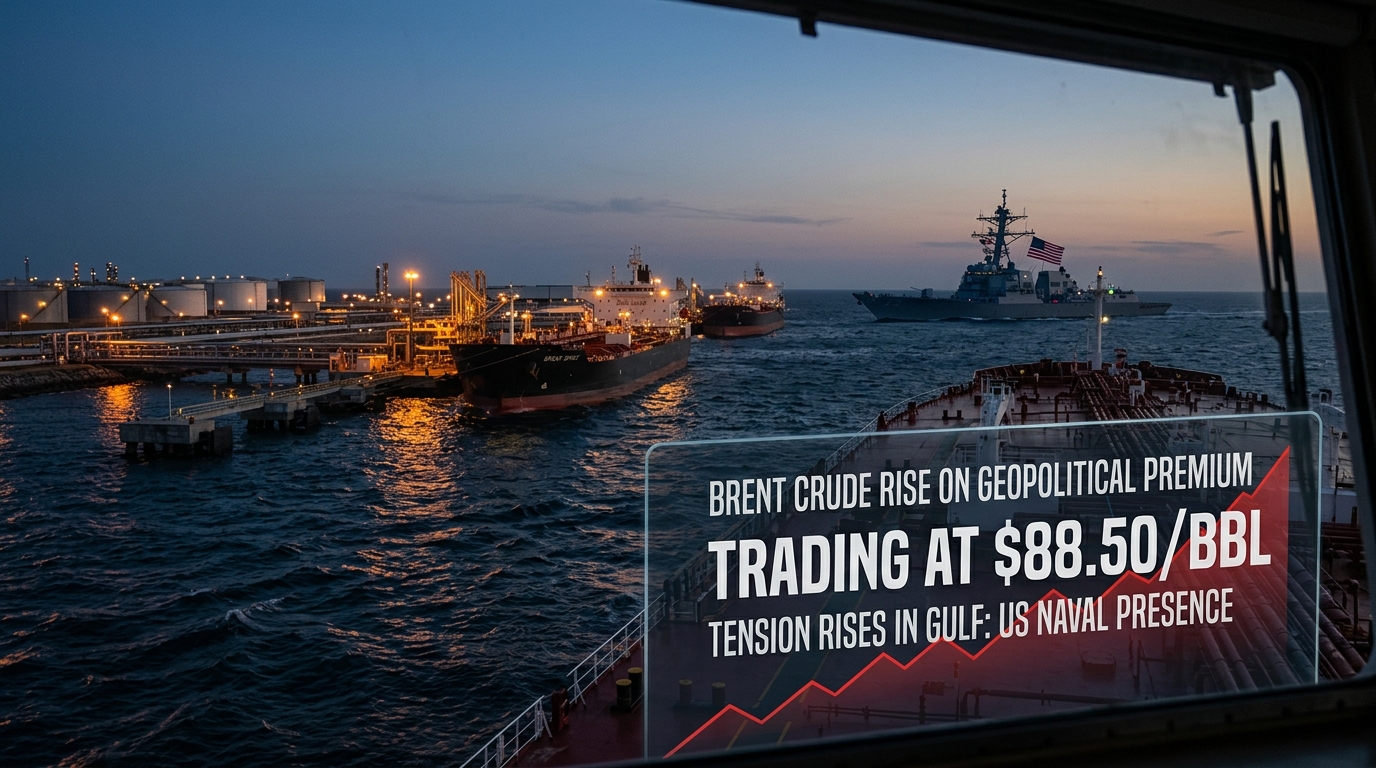
Brent crude futures advanced roughly 1% toward the $88.50 area after US Defence Secretary comments suggested Washington could keep a naval blockade of Iranian ports in place “indefinitely” and for as long as necessary. WTI crude also firmed, extending the geopolitical risk premium that has kept oil prices elevated for much of the year.
The latest rhetoric comes amid still-unresolved efforts to reach a lasting agreement ending the Iran conflict. Traffic through the Strait of Hormuz remains constrained, supporting a structural tightness narrative even as some earlier supply fears had eased. Energy shares and related equities tend to respond positively in the short term to higher crude, while rate-sensitive and consumer-discretionary sectors face headwinds from the inflation and spending implications.
Treasury yields ticked higher alongside the oil move, reflecting renewed concern that elevated energy costs could keep core inflation stickier than the recent softer CPI and PPI readings implied. Equity futures remained mixed as investors balanced the positive momentum from record S&P 500 closes against the fresh geopolitical and inflation cross-currents.
Market participants will continue to parse official statements and any diplomatic developments for clues on whether the blockade threat is negotiating leverage or a durable policy stance. In the near term, oil volatility is likely to remain elevated, influencing sector rotation and the broader risk appetite of equity investors.
For energy producers and refiners the higher price deck is constructive for cash-flow generation, while airlines, chemicals and other energy-intensive industries face margin pressure. The interplay between oil, yields and equity multiples remains a central theme for the remainder of the summer.