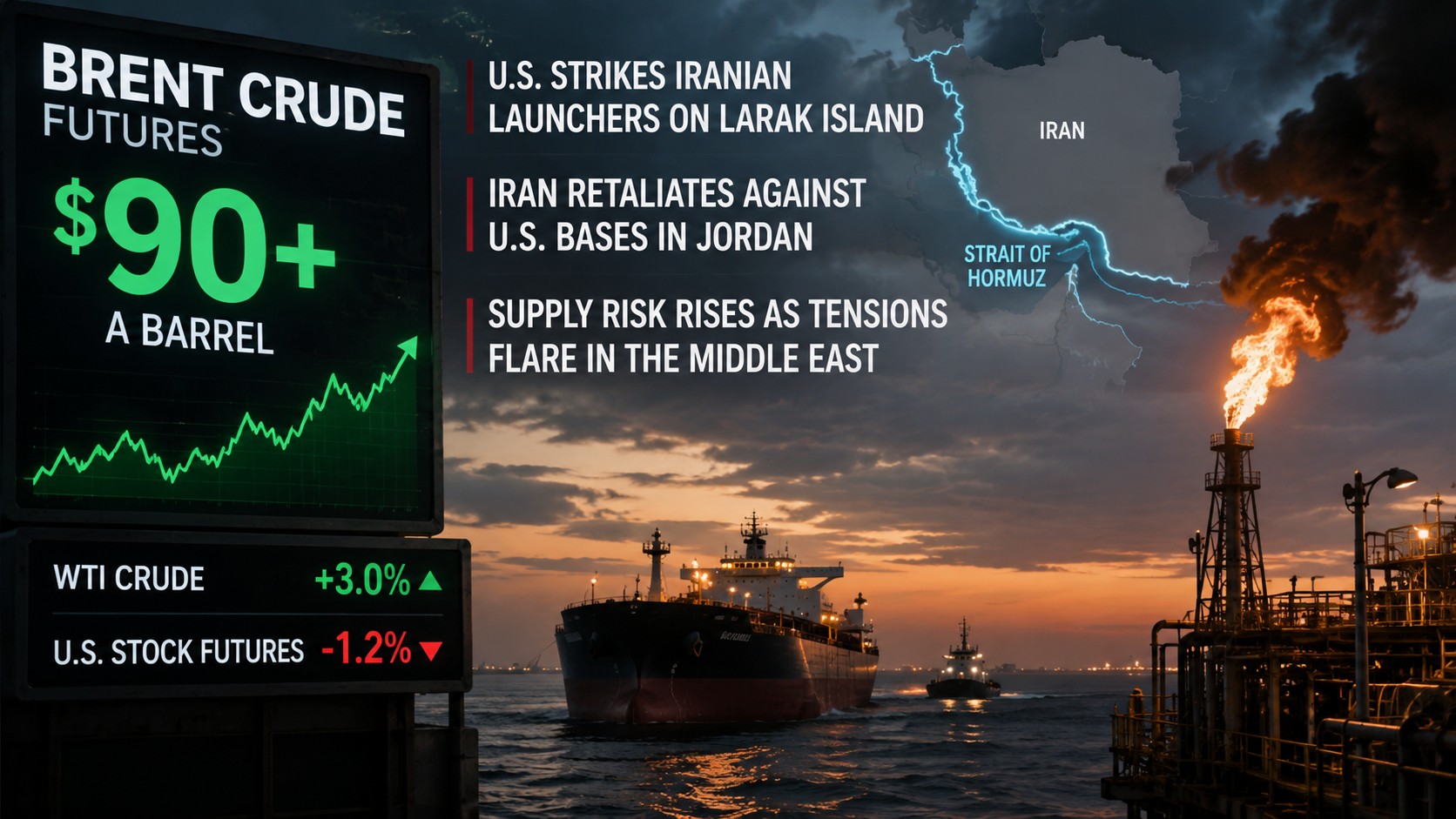
Brent crude futures moved back above $90 a barrel on Monday after the United States and Iran exchanged strikes for the first time in approximately one month, reigniting concerns over oil flows through the Strait of Hormuz. U.S. Central Command said American forces attacked two Iranian rocket launchers on Larak Island that were preparing to deploy sea mines into the waterway. Iran’s Islamic Revolutionary Guard Corps later claimed it targeted U.S. military facilities in Jordan in response.
West Texas Intermediate crude rose roughly 3% in early trading, trading near $86 a barrel, while Brent advanced more than 2% to levels around $90.50–$91. The price action reversed last week’s decline and pushed both benchmarks toward monthly gains after a volatile August. Market participants noted that tanker traffic through the Strait of Hormuz has already been reduced at times this year, and any sustained disruption would tighten global balances further.
U.S. equity futures slipped in response, with contracts on the S&P 500 and Nasdaq 100 pointing to a softer open. Energy producers and refiners were expected to outperform on the open while rate-sensitive and growth-oriented sectors faced pressure from the combination of higher oil and elevated Treasury yields. The 10-year yield remained near multi-month highs as traders continued to digest Federal Reserve Chair Kevin Warsh’s hawkish Jackson Hole remarks from Friday.
Analysts highlighted that the latest escalation undermines recent diplomatic efforts involving Oman and other mediators aimed at de-escalation and reopening commercial shipping lanes. Kharg Island, which historically handled the bulk of Iran’s oil exports, remains a focal point of risk. President Trump referenced related infrastructure in social-media comments, though official details on any additional actions were limited.
With the U.S. economic calendar relatively light until Friday’s employment report, geopolitical developments and oil price swings are likely to dominate near-term trading. Investors will watch whether the exchange remains contained or broadens into further tit-for-tat actions that could sustain the risk premium in crude markets through the remainder of the week.