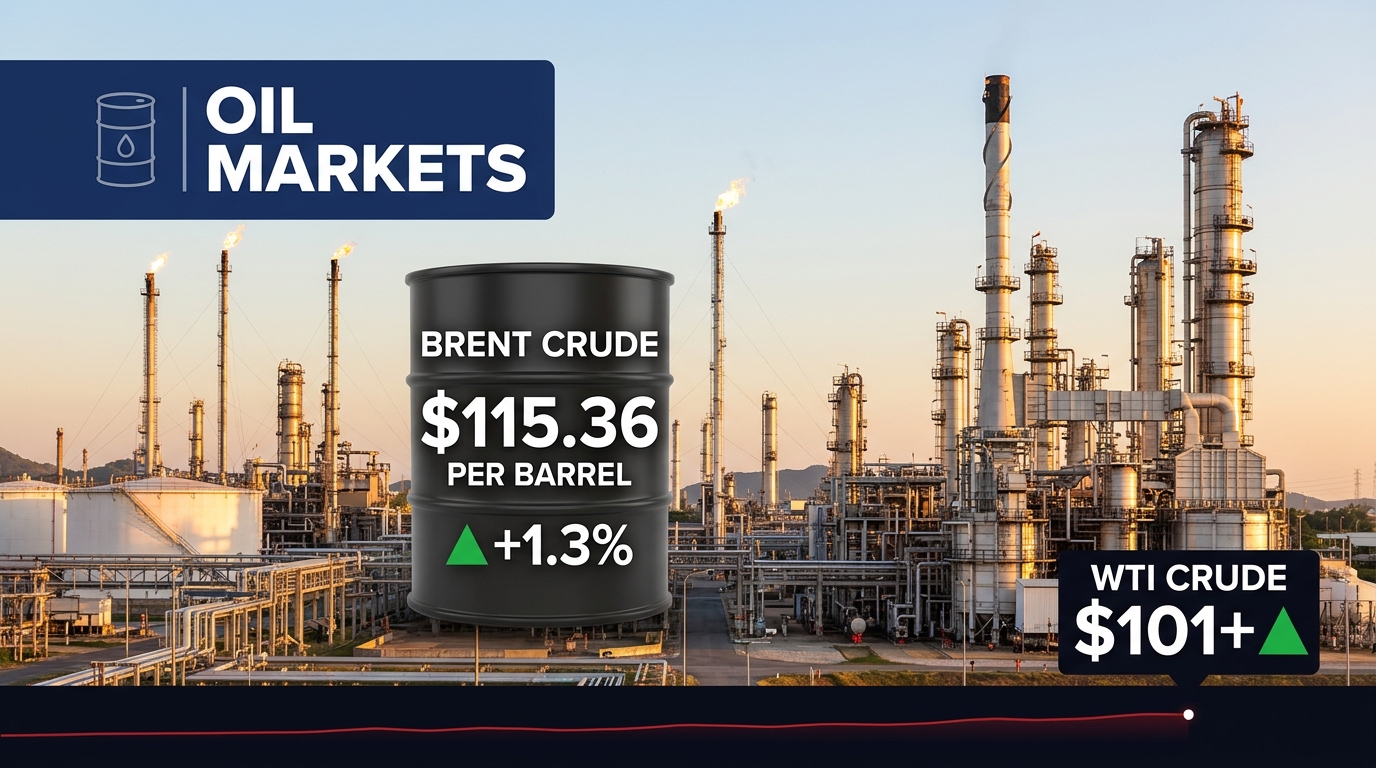
Oil prices climbed on Wednesday after Yemen's Houthis said they hit Saudi Arabia's largest oil refinery with a missile, renewing concern about supply risks tied to the conflict with Iran and its proxies. Brent crude futures rose as much as $2.02, or 1.8%, to $115.90 a barrel in early trading, while U.S. West Texas Intermediate gained about 2% to $101.91. Prices later pared some of the move, with Brent around $115.24 and WTI near $101.52 by mid-morning in London.
The Houthis said on Tuesday that the missile struck the 550,000-barrel-per-day facility, escalating attacks on the world's second-largest crude producer. Saudi authorities had not immediately confirmed the strike. That uncertainty leaves the market pricing risk rather than verified lost barrels, which means prices could reverse if the damage proves limited or rally further if refining capacity is impaired.
The move reversed part of Tuesday's slide, when prices fell nearly $2 as regional diplomacy eased fears about supply. Commodity strategists at a Dutch bank said the market is pricing a greater likelihood of re-escalation. Oil had recently traded near six-month highs before hopes that hostilities involving Iran would ease pulled prices lower, so Wednesday's rebound shows how quickly sentiment can swing on headlines.
Supply fundamentals add to the tension. Production in most of the seven core OPEC+ members, including Saudi Arabia, Russia, Iraq, Kuwait, Algeria, Kazakhstan and Oman, is running below output targets. A group meeting on Sunday is expected to keep December targets unchanged, according to sources, which limits any near-term policy relief. In the United States, an analyst poll pointed to a small rise in crude inventories of about 15,000 barrels for the week ended Oct. 23, ahead of official data later in the session.
For U.S. markets, the key channel is inflation. Crude above $100 feeds into gasoline, transportation and petrochemical costs, and it arrives on the day the Federal Reserve decides on rates after a September hike. Economists cited in market coverage say higher prices could persist into 2027, a scenario that would make it harder for the central bank to pivot toward easing. Energy producers and refiners typically benefit from higher crude, while airlines, cruise operators and consumer discretionary companies face margin pressure.
Positioning matters. S&P 500 futures were modestly higher and the VIX was near 17.5 before the open, suggesting equity investors have not priced a major energy shock. The 10-year Treasury yield is near 5%, so an oil-driven rise in inflation expectations could pressure bonds and rate-sensitive stocks at the same time. Traders will watch whether Brent holds above $115, whether Riyadh confirms any damage, and whether there is retaliation or a diplomatic response in the coming days.
Investors seeking exposure to the move often use broad crude-oil products rather than single names, but headline-driven spikes can fade quickly. Given the unconfirmed nature of the attack and the weekend OPEC+ meeting, risk management and defined exit levels are essential for paper and live portfolios alike.