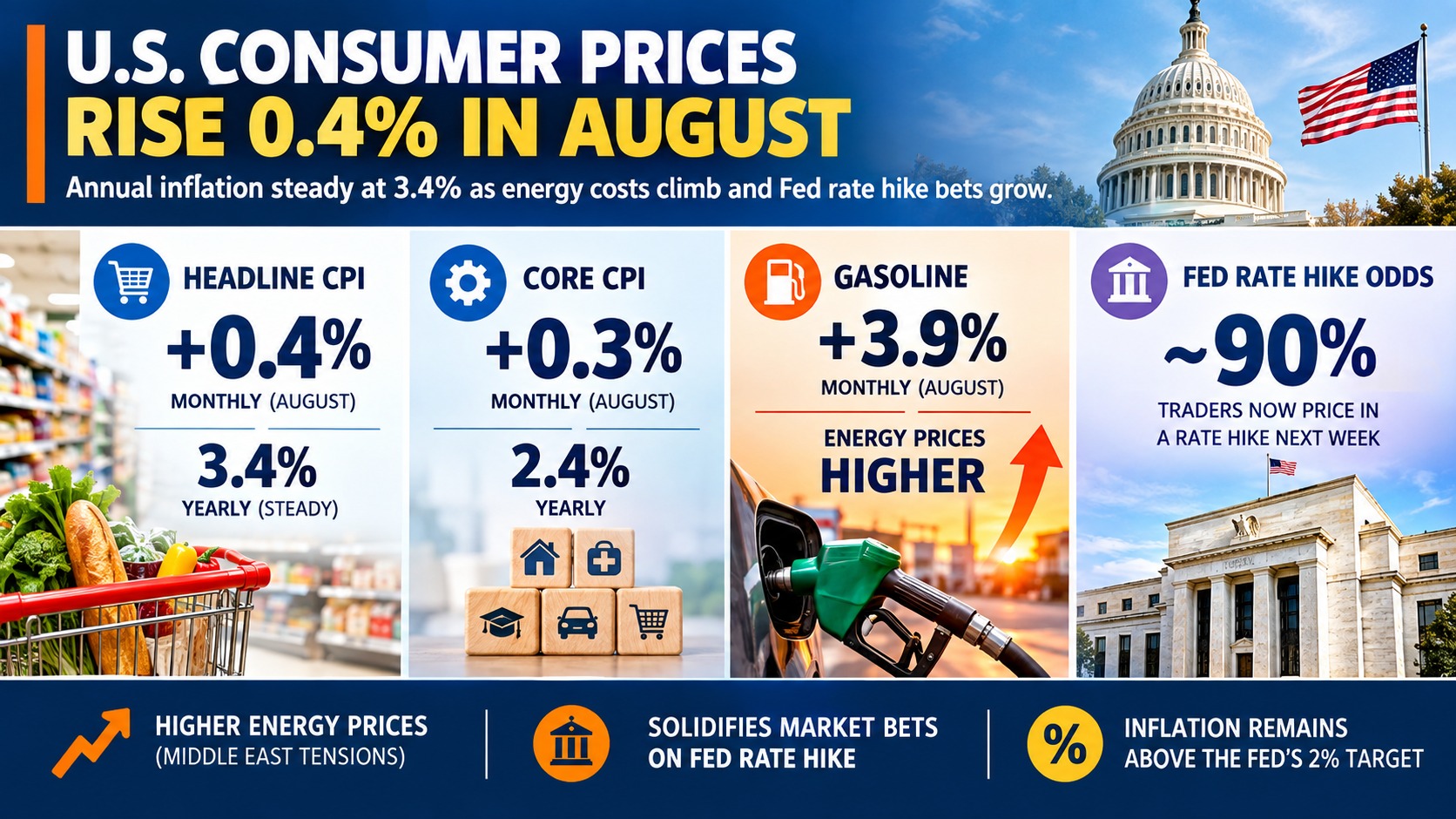
U.S. consumer prices rose a seasonally adjusted 0.4% in August, holding the 12-month inflation rate steady at 3.4%, according to the Bureau of Labor Statistics. Core CPI, which excludes food and energy, increased 0.3% for the month and 2.4% from a year earlier, with the monthly core reading coming in hotter than the 0.2% consensus forecast that economists had anticipated.
Energy costs drove much of the headline increase. Gasoline prices surged 3.9% and accounted for more than one-third of the overall monthly gain, while the broader energy index climbed 2.1%. The jump reflected ongoing supply disruptions linked to Middle East conflict, with the energy category up 16.3% year-over-year. Food prices edged up just 0.1%, and shelter costs rose 0.3% after more muted readings in prior months, signaling that housing-related inflation remains sticky even as other categories moderated.
The data represents the final major inflation release before the Federal Reserve’s policy meeting next week. Traders immediately raised the probability of a 25-basis-point rate hike to around 90%, according to CME FedWatch, up from roughly 70% before the report. The federal funds rate has remained in a 3.5%–3.75% range throughout 2026, and the latest print leaves little margin for policymakers to delay action if they remain committed to returning inflation fully to the 2% target.
Chair Kevin Warsh has emphasized that rates can stay on hold only if disinflation continues. Economists noted that the combination of sticky core prices and renewed energy pressure leaves little room for patience. Markets had already been bracing for higher rates after a hotter-than-expected producer price index earlier in the week and a sharp rise in Treasury yields that pushed the 10-year note toward multi-year highs.
Stock index futures, which had been higher on the back of easing oil prices, pared some gains after the release. The report arrives against a backdrop of elevated oil benchmarks, multi-year highs in longer-term yields, and a week of consecutive equity declines that left the major averages on track for their worst weekly performance in months. Investors now face a binary outcome at the upcoming FOMC decision that could reshape rate expectations for the remainder of the year and influence everything from mortgage rates to corporate borrowing costs.
While headline inflation matched expectations, the upside surprise in core monthly momentum and the energy contribution keep inflation concerns front and center. Policymakers will weigh whether the latest reading signals persistent underlying pressure or a temporary energy-driven spike. Either interpretation increases the likelihood of tighter policy in the near term, especially given the Fed’s recent public communications stressing vigilance against a reacceleration in prices.
Beyond the immediate rate outlook, the CPI data also carries implications for consumer spending and corporate margins. Higher gasoline and broader energy costs reduce discretionary income for households already contending with elevated living expenses, potentially dampening demand in retail, travel, and other interest-sensitive sectors. At the same time, companies that can pass through higher input costs may protect profitability, while those with limited pricing power face margin compression.
The release also coincides with ongoing geopolitical tensions that have kept oil prices volatile and supply chains under scrutiny. Any further escalation in the Middle East could amplify the energy component of future inflation readings, complicating the Fed’s path. For now, the August figures have shifted market pricing decisively toward a September hike, setting the stage for heightened volatility as investors position ahead of the policy announcement.
Market participants will closely monitor subsequent comments from Fed officials in the coming days for any nuance that might alter the current consensus. In the meantime, the combination of firm core inflation and energy-driven headline pressure has reinforced the narrative that monetary policy remains restrictive for longer than many had hoped earlier in the year.