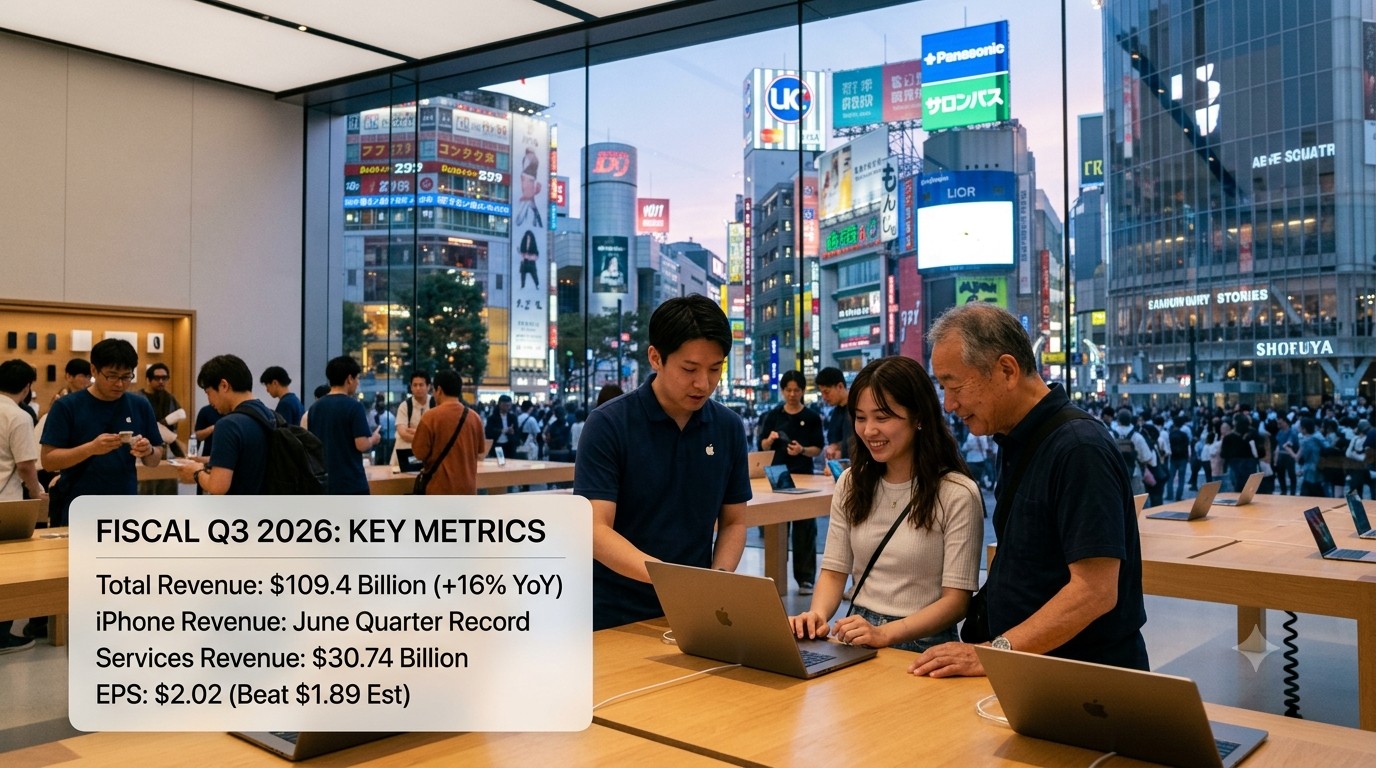
Apple reported its strongest June quarter ever Thursday, posting fiscal third-quarter 2026 revenue of $109.4 billion — a 16% year-over-year increase from $94.04 billion in the prior-year period and ahead of the $108.65 billion consensus compiled by LSEG. Diluted earnings per share of $2.02 surpassed the $1.89 analyst estimate, and the company set new June quarter records in iPhone, Mac, Services revenue, operating cash flow, and EPS simultaneously.
iPhone revenue of $54.3 billion grew 22% year-over-year — a June quarter record driven by continued strength in the iPhone 17 family and market share gains in key geographies. Mac revenue reached $10.35 billion, up 29% year-over-year and comfortably above the $8.74 billion consensus, powered by the MacBook Neo and MacBook Pro lineup and what Apple described as all-time records for both upgraders and new-to-Mac customers. Services revenue of $30.74 billion grew 12% year-over-year and set a June quarter record, though it came in modestly below the $31.22 billion analyst estimate — a rare Services miss that contributed to the initial after-hours reaction. iPad revenue of $6.19 billion declined 6% year-over-year, below the $6.92 billion forecast.
Company gross margin expanded to 50.1%, up 80 basis points sequentially, and included approximately 2 percentage points of favorable impact from tariff refunds — a one-time tailwind that contributed approximately 2.5 percentage points to products gross margin and will not repeat in Q4. CEO Tim Cook, appearing in what many analysts described as his final earnings call given his planned transition to Executive Chairman later this year, highlighted the quarter's geographic breadth: Apple set revenue records in every major segment globally. Greater China revenue, while strong, came in at $18.8 billion — below analyst estimates of approximately $19.5 billion — reflecting ongoing competitive pressure from domestic brands despite overall market share gains.
Despite the headline beats, Apple shares fell more than 6% in extended trading following management's September-quarter guidance, which cited "supply constraints" as a limiting factor on revenue growth. This language — specific to manufacturing capacity rather than demand — signals that Apple anticipates production shortfalls heading into the iPhone launch cycle, the single most financially consequential quarter of the fiscal year. The guidance framing echoed dynamics seen in prior years when new iPhone model ramps encountered component bottlenecks, though in the current geopolitical environment, supply chain vulnerability carries added weight given ongoing U.S.-China tensions and the Iran war's effects on logistics and component costs.
The quarter marks a significant leadership milestone. Cook and incoming CEO John Ternus — named as his successor earlier this year — attended the premiere of Apple TV+'s Ted Lasso Season 4 together in Los Angeles on Monday, signaling the transition is proceeding smoothly. Services, which now generates $30.7 billion quarterly and has crossed 1.5 billion paid subscriptions, remains the primary long-term valuation driver as the hardware cycle matures. The modest Services miss and supply guidance caveat will weigh on the stock in Friday's session, providing a rare near-term entry point for long-term investors who view the Apple ecosystem as structurally undervalued relative to its Services annuity stream.