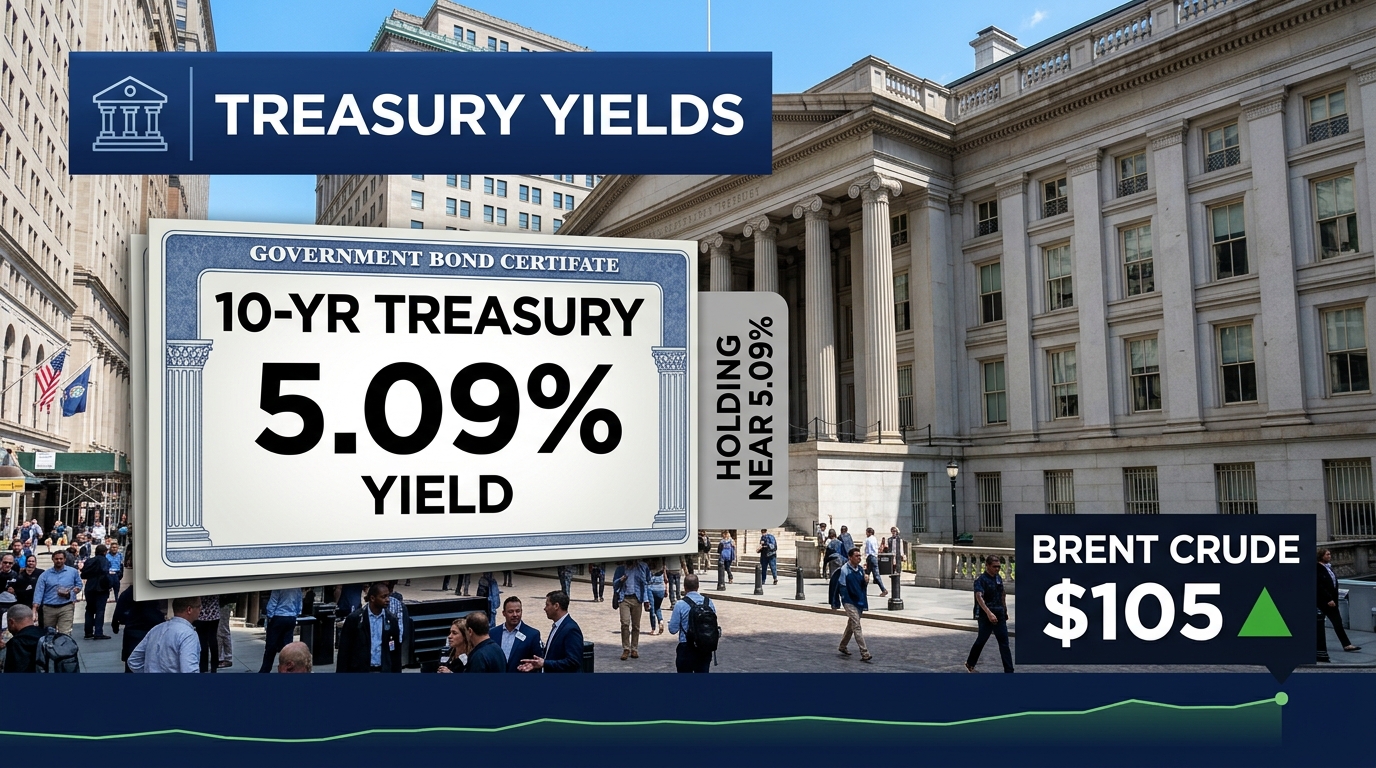
U.S. stock futures pointed higher ahead of Friday's open as a technology-led selloff showed signs of easing and Treasury yields retreated from recent multi-year highs. The 10-year Treasury yield stood near 5.09% in early trading, while S&P 500 futures were up about 0.2%, blue-chip futures gained roughly 0.4%, and contracts tied to the Nasdaq 100 were little changed as of 5:21 a.m. ET.
The move follows a Thursday session in which all three major indexes closed higher as investors rotated out of large technology names and into other sectors. The S&P 500 rose 0.33% and the Nasdaq Composite added 0.08%, with both ending a three-day losing streak. The Dow Jones Industrial Average led, climbing more than 500 points, or about 1.08%. Despite that rebound, the S&P 500 is on pace for a weekly decline of almost 1% and the Nasdaq Composite for a drop of more than 2%, while the Dow is tracking a gain of around 1%.
Inflation remains the dominant macro driver. September core consumer prices rose 0.3% from the prior month, versus a 0.2% forecast, leaving the annual core rate at 2.6%, while energy prices jumped 5.2% on the month and gasoline climbed 9.1%. The hotter reading has reinforced expectations that policy will stay restrictive, and mortgage rates near 7.5% are already weighing on housing activity.
Attention now turns to Fed Chair Kevin Warsh, who is scheduled to speak Friday. Investors are looking for any indication of how policymakers weigh sticky inflation against growth concerns. Data on U.S. import and export prices and industrial production is also due, with consensus calling for a 0.8% rise in import prices, a 1% gain in export prices and a 0.4% increase in industrial output for September.
Energy markets add another layer. Brent crude futures traded near $105 a barrel and West Texas Intermediate near $97, amid Middle East tensions and supply concerns, and media reports pointed to an attack by Houthi forces on a palace in Aden, Yemen. Gold was near $4,199 an ounce, up about 0.7%, while the VIX volatility index sat near 16.
Overseas, sentiment was constructive. European stocks opened mostly higher as technology shares rebounded after a week of losses, and Hong Kong's Hang Seng Index rose 0.52%. Japan's Nikkei 225 gained about 1.4%.
For portfolio positioning, the setup favors selectivity. Long-duration growth shares and rate-sensitive areas such as housing and real estate remain exposed if yields push higher, while energy producers benefit from elevated crude prices. The technology selloff has cooled but not reversed; semiconductors have fallen roughly 7% over the past week by one measure, and investors continue to question the financing behind artificial intelligence infrastructure. A cautious Fed message could prolong the pressure on valuations, whereas any sign that policymakers will look through energy-driven inflation could extend Thursday's broadening rally.
Traders should expect volatility around the speech and the economic data releases, with headline risk from the Middle East and from AI-related credit concerns likely to keep intraday ranges wide.