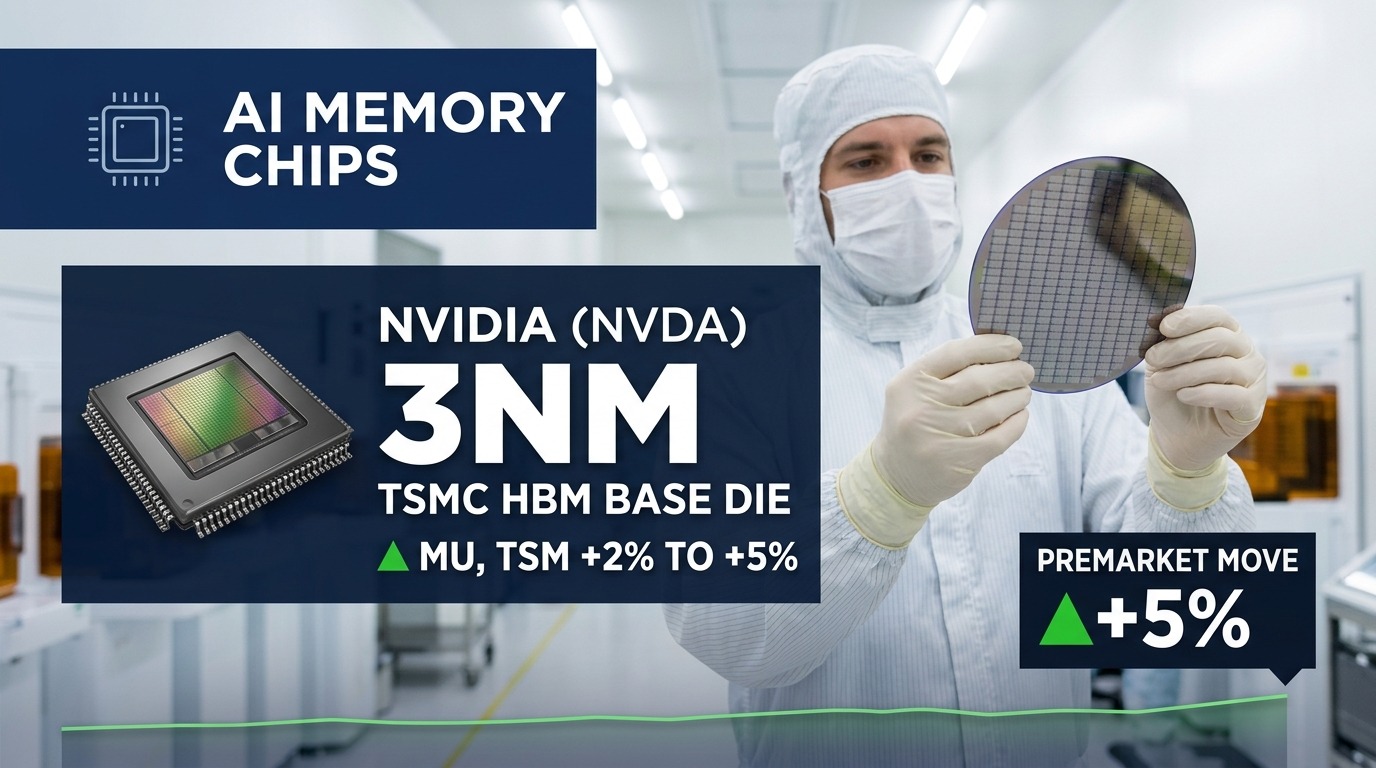
Nvidia is reportedly asking Samsung, SK Hynix and Micron to use Taiwan Semiconductor Manufacturing Co's 3-nanometer process to build the base die for its next-generation high-bandwidth memory chips, according to reports circulating on Monday, October 19. Memory and chip stocks rose between 2% and 5% in premarket trading. The report has not been confirmed by the companies involved.
The base die sits at the bottom of an HBM stack and handles the interface between the memory layers and the processor. Producing it on an advanced logic process from TSMC, rather than each memory maker's own technology, would standardize a key component and could give Nvidia flexibility between memory suppliers as demand for AI accelerators soars.
In premarket trading, Micron rose 3.3% and Broadcom 2.9% in Reuters' tally, while Stocktwits reported that Micron, SK Hynix, Broadcom, Qualcomm and TSMC were up between 2% and 5%. Nvidia itself gained more than 1%. The move helped lift Nasdaq 100 futures by 1.05% as AI-linked shares rebounded from last week's selloff.
The implications differ by company. For Nvidia, multiple qualified suppliers lowers supply concentration risk in HBM, which has been a bottleneck for AI systems. For TSMC, the request would add demand for 3-nanometer capacity. For memory makers, the change could narrow differentiation in base-die design while increasing reliance on TSMC capacity and costs, a potential margin consideration that investors will want to monitor.
How the supply chain may shift: high-bandwidth memory has been among the tightest components in AI server builds, and Nvidia's reported request suggests it wants more control over architecture and sourcing as it prepares successor platforms. Moving the base die to a common foundry process could also ease qualification, since a standard logic layer would let memory vendors focus on the DRAM stacks themselves.
Context matters here. Chip shares fell sharply last week, and AI memory volatility has been a recurring theme as investors debate the cyclicality of the business. Micron and SK Hynix have been prominent beneficiaries of HBM demand, but the group is sensitive to any sign that AI spending is slowing. Monday's bounce shows how quickly sentiment can swing on supply chain headlines.
What to watch: official confirmation, the timing of any redesign, and commentary on HBM supply from upcoming earnings, including Lam Research and Texas Instruments on Wednesday and Western Digital on Thursday. Results from Tesla and Meta may also shape expectations for AI capital spending across the chain.
Trading considerations: premarket gains across Micron, SK Hynix, Broadcom, Qualcomm and TSMC suggest the move is part of a broader chip rebound rather than a single-stock catalyst, so follow-through depends on whether Nasdaq futures hold their gains at the open. Traders should be mindful that chip stocks have been volatile and that unconfirmed supply chain reports can reverse quickly.
Risks include denial or clarification from the companies, delays in any process transition, and capacity constraints at TSMC. This article is informational only and is not investment advice.