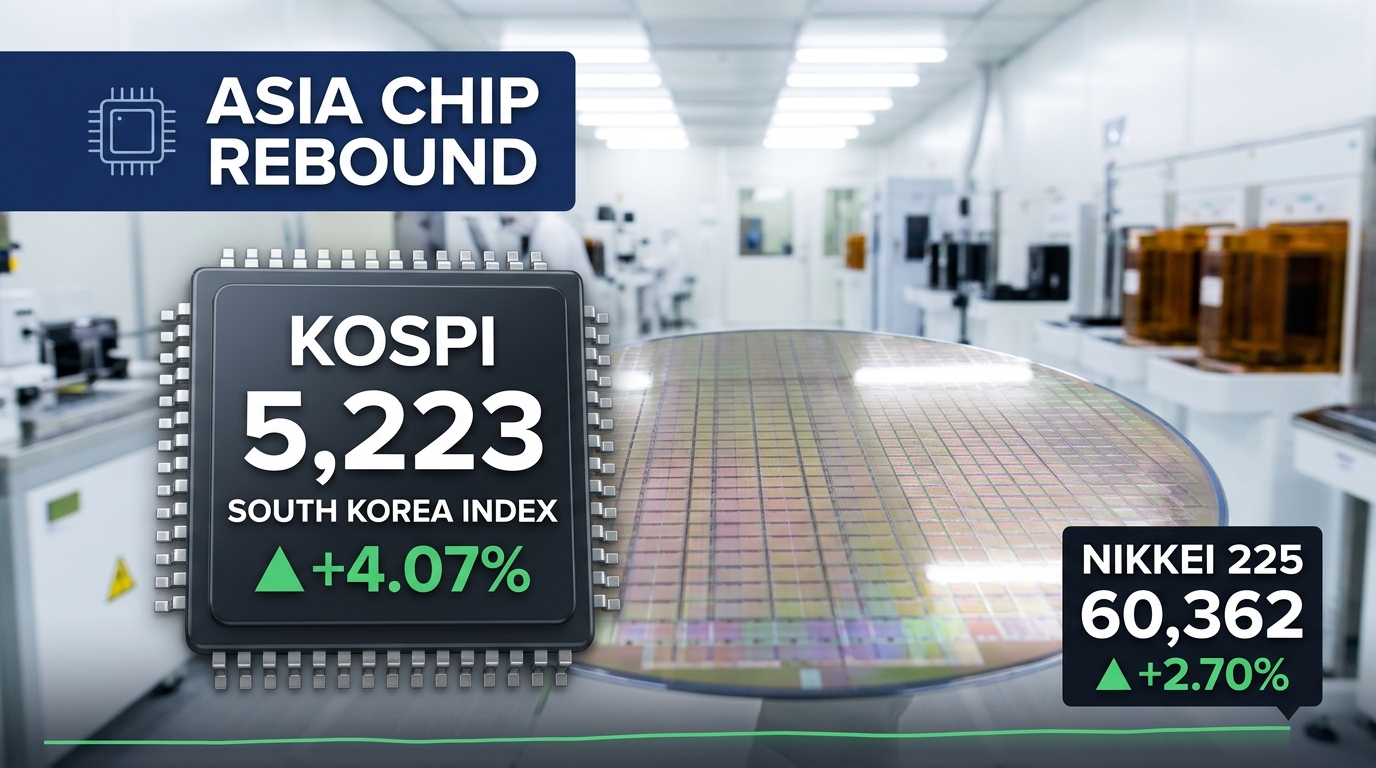
Asian equities staged a sharp relief rally on Tuesday as the technology rebound that lifted Wall Street on Monday carried into the region, with chip-related shares leading gains. South Korea’s Kospi surged 4.07% to 5,223 and Japan’s Nikkei 225 rose 2.70% to 60,362, according to a regional market summary. Hong Kong’s Hang Seng added 0.50%, Shanghai gained 0.15% and Australia’s ASX 200 rose 1.10%.
The catalyst was Monday’s U.S. session, when the S&P 500 jumped 2.35% and the Nasdaq rose 2.74%, with the Philadelphia Semiconductor Index soaring 6.85% and erasing much of the prior week’s losses. In Tokyo, the Nikkei opened higher and at one point climbed 3.05% to reclaim the 60,000 level. SoftBank rose as much as 11.15% to 3,779 yen, and Kioxia gained 8.59% to 9,015 yen, while SK Hynix also jumped roughly 8%, TradingKey reported.
The strength in Seoul was intense enough to trigger a market safeguard. Saxo Markets noted that Kospi 200 futures surged more than 5%, prompting a temporary suspension of automated buy orders. Circuit mechanisms like that are designed to slow program trading during extreme moves, and their activation is a reminder of how stretched positioning had become after last week’s selloff.
For U.S. investors, the Asian rally matters for two reasons. First, Korea and Japan host some of the world’s most important memory and AI-hardware suppliers, so their price action is an early read on global semiconductor sentiment. Second, it suggests the rebound is not purely a U.S. phenomenon. Saxo described Monday’s session as the strongest for Wall Street since April, helped by falling oil prices and renewed hopes for Middle East diplomacy, and noted that Asian technology stocks led gains globally.
The macro driver is the same on both sides of the Pacific. Brent crude fell below $92 on Monday and extended losses early Tuesday, easing worries about inflation, while the VIX dropped 22% to 19.92. But the rally also leans heavily on what comes next: the October U.S. Consumer Price Index is due at 8:30 a.m. Eastern. Economists forecast a 0.3% headline gain and a 0.2% core gain, and in-line or lower figures could sustain momentum, whereas a hotter reading risks lifting Treasury yields and stalling the rebound.
That sensitivity is heightened by Federal Reserve expectations. Futures put the odds of a quarter-point rate hike on December 9 at roughly 65% to 80%, and a surprise on core inflation would likely hit long-duration technology shares first. Skew in index options remained elevated even as the VIX fell, a sign that some investors are still paying up for downside protection despite the rally.
For paper-trading purposes, the Asian session argues for caution about chasing the semiconductor bounce at the U.S. open. Large single-day gains in memory and AI names often give way to consolidation, especially when a major data release is imminent. Traders may prefer to wait for the inflation print, then watch whether chip leaders hold Monday’s gains on above-average volume. This article is informational and not investment advice.