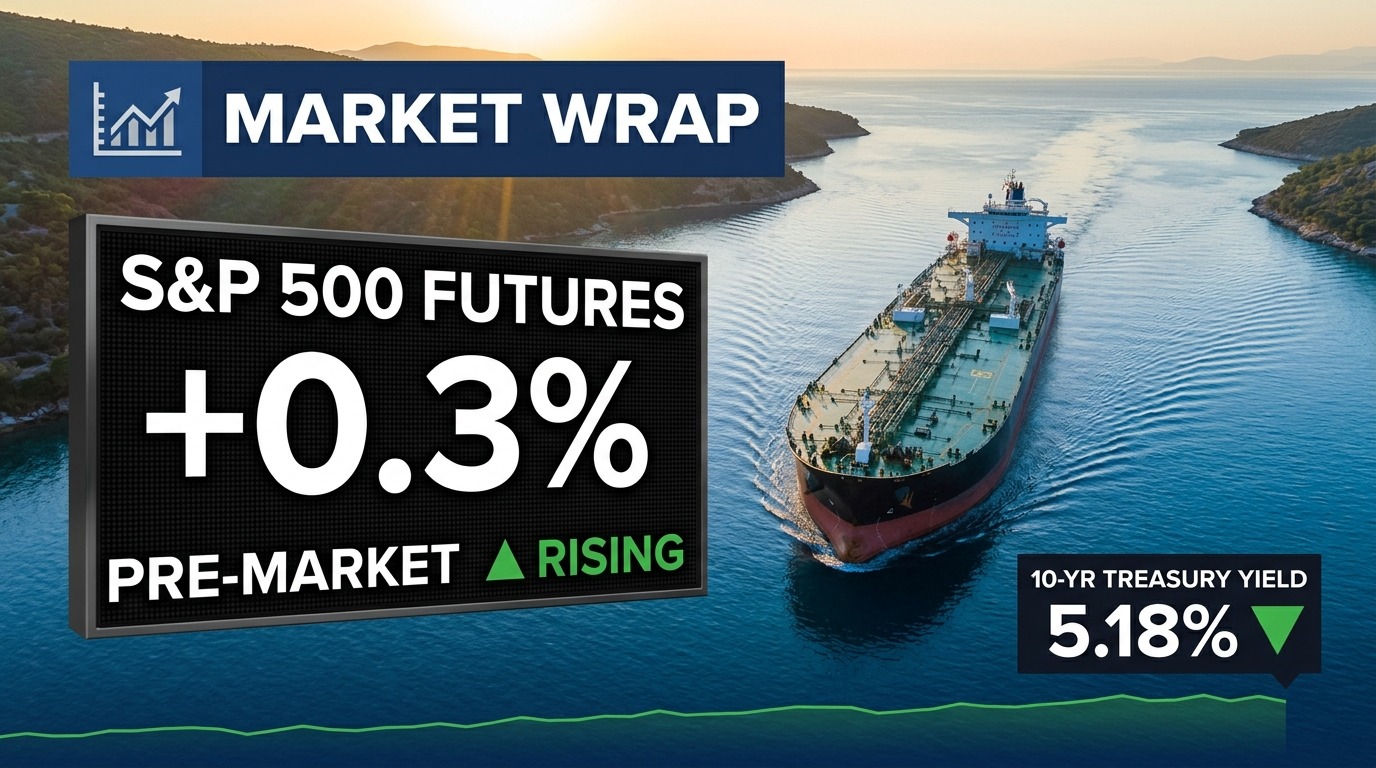
U.S. stock-index futures pointed to a higher open on Friday, with Nasdaq 100 contracts gaining approximately 0.5 to 0.7 percent, S&P 500 futures rising 0.3 percent, and Dow futures adding 0.2 percent. The advance followed a mixed Thursday session in which the Dow fell 0.31 percent while the S&P 500 and Nasdaq finished essentially flat. Relief came from a pullback in crude oil and a modest retreat in Treasury yields after reports that U.S. and Iranian negotiators are exploring a phased arrangement to reopen the Strait of Hormuz and ease the American naval blockade of Iranian ports. Brent crude, which had settled near $107 a barrel on Thursday, traded lower toward the $105 area, while West Texas Intermediate slipped below $93.
The 10-year Treasury yield, which had touched 5.225 percent—its highest level since 2007—eased to around 5.16 to 5.18 percent. The 30-year yield also retreated from a 2004 high near 5.50 percent. Market participants interpreted the diplomatic signals as reducing the immediate risk of further energy-driven inflation pressure that had fueled bets on additional Federal Reserve rate hikes. Despite the overnight calm, the broader backdrop remains challenging. The Dow is still on track for a fourth consecutive weekly decline, and futures markets continue to price a meaningful probability of another quarter-point hike at the October FOMC meeting. Strong recent labor and activity data, combined with sticky energy prices, have kept the higher-for-longer narrative intact even as geopolitical headlines improve at the margin.
Traders will focus on Friday’s durable-goods orders and final University of Michigan consumer-sentiment reading for fresh clues on demand and inflation expectations. In the meantime, the combination of AI-driven equity optimism and a temporary cooling in oil and bond yields has restored a constructive tone to risk assets as the week draws to a close. The bond market selloff earlier in the week had pushed global yields to multi-decade highs and raised concerns that persistent inflation could force the Federal Reserve into a more aggressive tightening path. Hawkish comments from several Fed officials, including New York Fed President John Williams, had reinforced those fears and helped drive the 10-year yield to levels not seen in nearly two decades.
Oil’s retreat on the Hormuz news offered a welcome counterbalance. The Strait of Hormuz handles a significant share of global seaborne oil trade, and any sustained disruption has immediate implications for energy prices and inflation expectations. Reports of a potential phased deal that would see Iran reopen the waterway in exchange for relief from the U.S. blockade therefore carried outsized market significance. While details remain fluid and previous diplomatic efforts have collapsed, the mere discussion was sufficient to trigger profit-taking in crude and a modest bid for Treasuries. Equity investors responded by rotating back into growth and technology names that had been pressured by the rise in discount rates.
Looking ahead, the durability of Friday’s relief rally will depend on whether oil and yields continue to stabilize or reverse higher once again. A meaningful de-escalation in the Middle East would ease one of the primary inflationary forces of recent months and potentially reduce the odds of further Fed tightening. Conversely, any breakdown in talks or renewed supply disruption could quickly reintroduce volatility. For the moment, however, the combination of AI optimism, a modest cooling in energy prices, and a pause in the bond-market rout has given equity bulls a constructive start to the final session of a turbulent week.