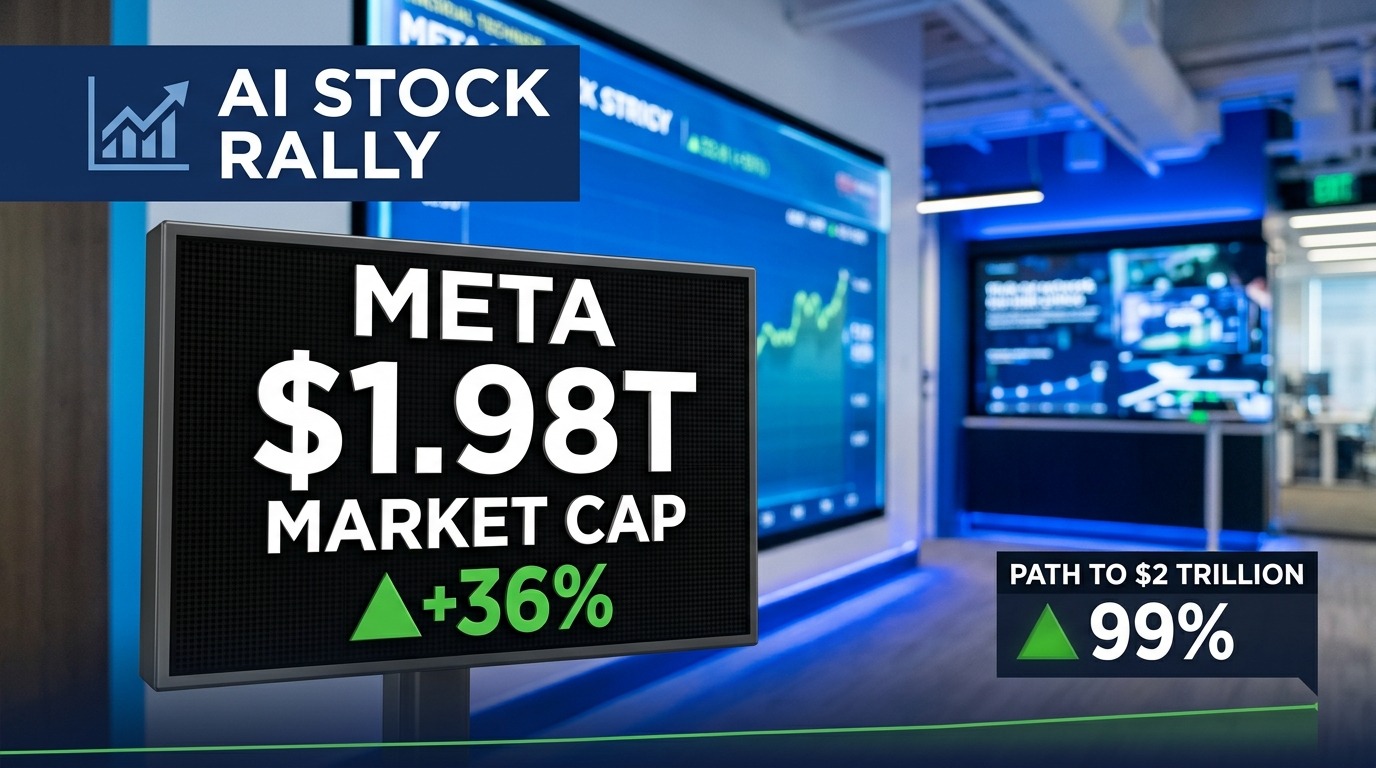
Meta Platforms Inc. has staged one of its strongest monthly performances in more than a decade, with shares advancing approximately 36 percent through late September and pushing the company’s market value to roughly $1.98 trillion. The surge places Meta within about 1 percent of the coveted $2 trillion market-capitalization threshold and ranks the stock among the top performers in the S&P 500 over the past five weeks. The primary catalyst has been enthusiastic reception to Meta’s Muse personal AI assistant, launched earlier in the month, along with the accompanying Charm handheld device unveiled this week. Early usage metrics among younger demographics and new commercial partnerships have reinforced investor confidence that Meta can convert its massive user base into a durable AI platform.
The company also benefited from the resolution of a long-running social-media addiction lawsuit via an $18 billion settlement, removing a notable legal overhang. Despite the sharp re-rating, some analysts continue to flag elevated capital-expenditure plans—projected near $140 billion for the year—as a potential constraint on free-cash-flow conversion. Nevertheless, the market has chosen to emphasize growth optionality over near-term spending intensity. Meta’s advance has also lifted broader sentiment toward AI-adjacent names, contributing to the resilience of the Nasdaq even as Treasury yields and oil prices remain elevated. The stock’s September performance marks its best monthly gain since July 2013 and has propelled Meta past several peers in the global ranking of largest public companies by market value.
Whether the stock can sustain momentum into the $2 trillion club will depend on continued evidence of Muse engagement, advertising-dollar reallocation toward AI features, and the company’s ability to manage infrastructure costs without sacrificing margin. For now, Meta stands as one of the clearest beneficiaries of the latest wave of generative-AI enthusiasm. Investors note that the rapid adoption of Muse among younger users provides a potential long-term moat, while the Charm device represents an early attempt to own a hardware form factor in the personal AI space. Partnerships announced with travel and delivery platforms have also expanded the commercial surface area of the new assistant.
From a valuation perspective, the sharp move has compressed the discount at which Meta traded relative to other mega-cap technology peers earlier in the year. Bulls argue that successful monetization of Muse could support a multi-year reacceleration in revenue growth and justify premium multiples. Bears counter that the capital intensity of the AI build-out remains a headwind and that competition from OpenAI, Google and others will limit Meta’s ability to extract outsized returns. The next earnings report, scheduled for late October, will provide the first quantitative look at Muse-related metrics and any early impact on advertising demand.
In the interim, the stock’s technical strength and the broader AI narrative continue to attract both momentum and fundamental buyers. Meta’s ability to leverage its existing social graph and messaging platforms gives it unique distribution advantages that pure-play AI companies lack. If engagement data remains strong and capital spending shows signs of efficiency gains, the path to $2 trillion and beyond appears open. Conversely, any slowdown in Muse adoption or upward revisions to the already large capital budget could trigger profit-taking after such a rapid ascent. For the moment, however, Meta has reasserted itself as a central player in the AI investment theme that continues to dominate equity market leadership.