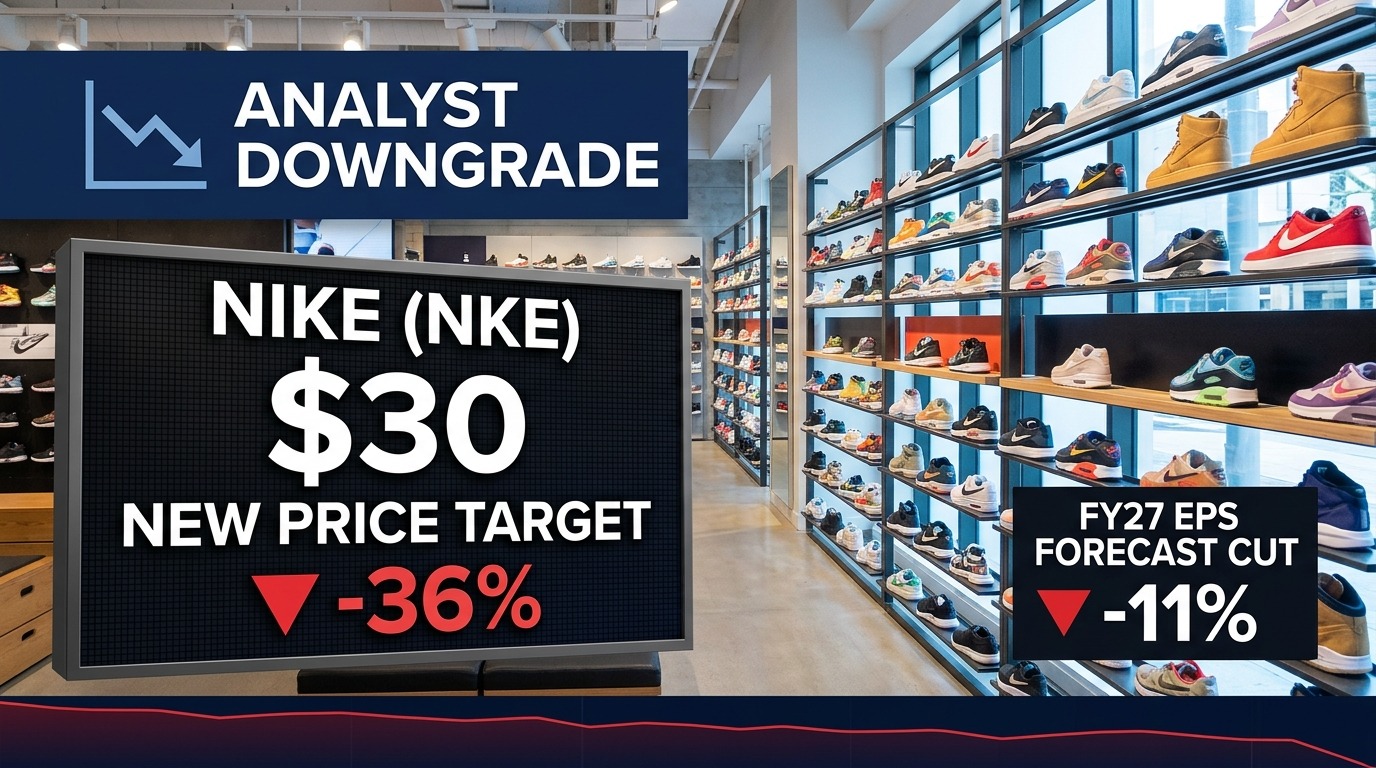
Bank of America Securities on Friday downgraded Nike Inc. to Underperform from Neutral and sharply reduced its price target to $30 from $47, implying meaningful downside from recent levels. The firm now anticipates sales declines through fiscal 2027 rather than a spring recovery and lowered its fiscal 2027 and 2028 earnings estimates by 11 percent and 12 percent. Analysts pointed to persistent competitive pressure, inventory overhang in key categories, and slower-than-expected progress in China and EMEA as primary drivers of the more cautious stance. Nike shares traded lower in premarket action following the note.
The downgrade adds to a string of recent target cuts and rating adjustments across the Street as the athletic-apparel giant continues to navigate a multi-year turnaround that has proven more protracted than many investors hoped. Wholesale demand remains soft in several regions, promotional intensity is elevated, and new product pipelines have yet to deliver the traffic lift management has targeted. While Nike has regained some share in North America running and has begun to stabilize certain lifestyle categories, Bank of America argued that the broader risk-reward has deteriorated. Higher interest rates and elevated energy costs are also seen as headwinds for discretionary consumer spending on premium footwear and apparel.
The stock already trades near multi-year lows, yet the bank believes further multiple compression is possible if fiscal 2027 guidance fails to show clear stabilization. Investors will look to Nike’s next quarterly update and any incremental commentary on inventory levels, China trends, and the cadence of new innovation launches. Until clearer evidence of a sustained recovery emerges, the Street appears inclined to remain selective within the athletic apparel group. Other firms have also trimmed targets in recent weeks, reflecting growing skepticism that the “Win Now” strategy will deliver meaningful results on the original timeline.
Competitive intensity from both established rivals and newer direct-to-consumer brands continues to pressure pricing power and shelf space. In China, macroeconomic softness and shifting consumer preferences have weighed on results longer than many anticipated. In Europe, Middle East and Africa, recent trends have reversed earlier progress, adding another layer of uncertainty. Management has pointed to progress in rightsizing sportswear inventory and regaining wholesale partnerships, yet the pace has lagged internal and external expectations. The upcoming analyst day later this year is viewed as a critical opportunity for Nike to reset expectations and outline a clearer path to sustainable growth.
For portfolio managers, the downgrade reinforces the case for caution on the name until tangible evidence of a turnaround appears in the numbers. Some investors may view the depressed valuation as an eventual opportunity, but near-term catalysts appear limited and the risk of further estimate cuts remains elevated. In a market environment already challenged by rising yields and geopolitical noise, high-multiple consumer discretionary names with execution questions face an especially high bar. Nike’s iconic brand equity remains intact, yet converting that equity into consistent top-line and margin recovery has proven elusive, leaving the shares vulnerable to further downside on any additional negative surprises.