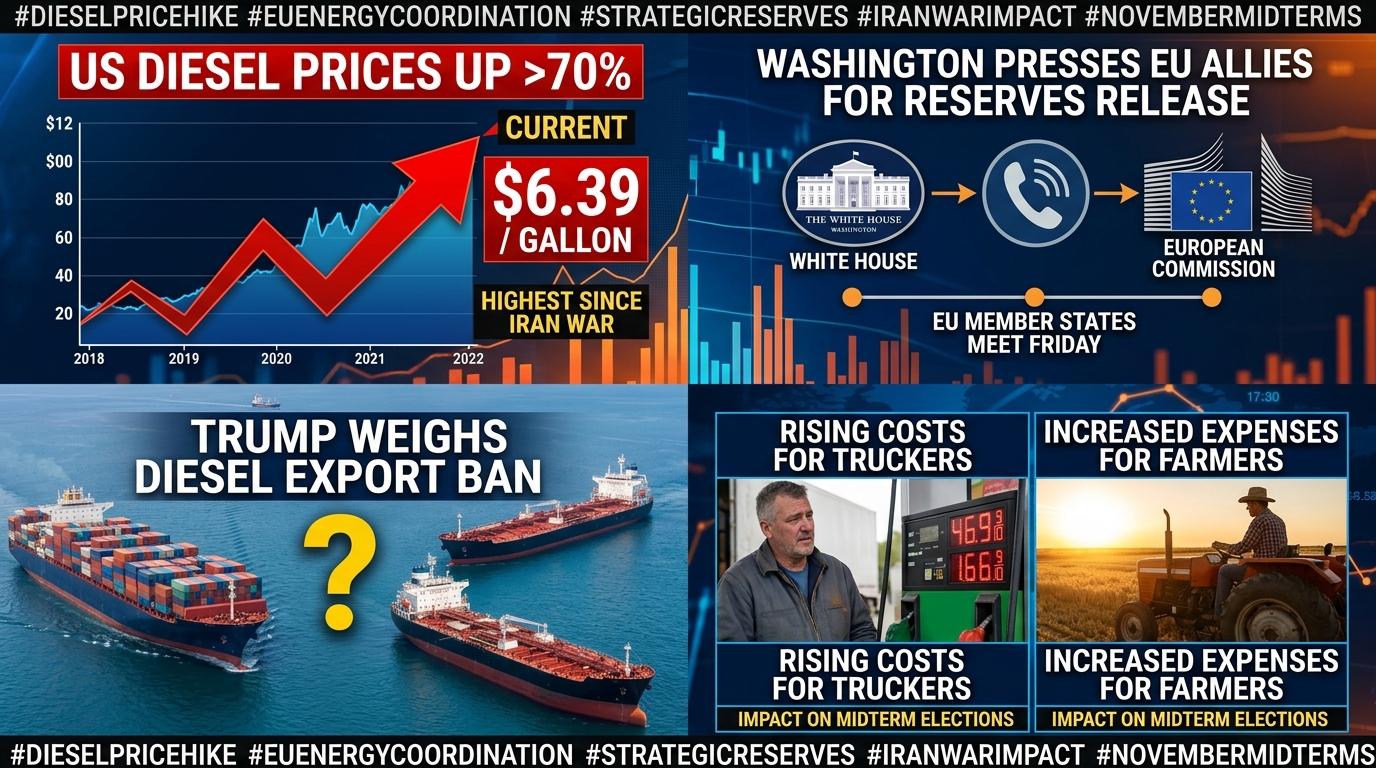
US diesel prices have climbed more than 70% since the start of the Iran war to an average of about $6.39 a gallon, according to AAA, and Washington is escalating pressure on allies to help bring them down. On Thursday the United States urged European governments to release strategic diesel reserves immediately, with reports indicating the administration is particularly focused on France and Germany.
EU member states are scheduled to meet with the European Commission on Friday to discuss a coordinated response to soaring fuel costs. French President Emmanuel Macron is also expected to convene a video meeting of G7 leaders, with a broader G7 gathering anticipated in mid-October, to explore levers for easing prices.
At the same time, President Donald Trump has floated the possibility of banning US diesel exports. Energy Secretary Chris Wright has said the White House is considering restrictions rather than an outright ban, while Politico reported that the administration was preparing a plan for a 90-day export ban. Analysts warn that a restriction would push European diesel prices and premiums to unprecedented levels, since the United States has supplied roughly half of Europe's diesel imports in recent months.
Retail diesel hovered near $6.50 a gallon in late September, just below its record of $6.53, putting strain on truckers, farmers, construction firms and households. With midterm elections approaching in November, the political stakes of fuel costs are rising, and Trump has also asked Chinese President Xi Jinping to increase production of refined petroleum products to stabilize global supply.
Energy markets are also bracing for an OPEC+ gathering on Sunday, according to market commentary, adding another potential source of volatility for crude and refined products. Oil prices have swung sharply this year as the conflict, Strait of Hormuz risks and shifting demand forecasts have repeatedly changed the supply outlook.
For equity investors, the diesel squeeze cuts in several directions. Higher fuel prices raise costs for transportation, agriculture and industrial companies and risk feeding into inflation at a time when Treasury yields recently hit 24-year highs. Energy producers and refiners can benefit from elevated margins, but the threat of export restrictions and coordinated reserve releases could cap those gains and increase policy risk.
Sector exchange-traded funds such as the Energy Select Sector SPDR Fund offer broad exposure to producers and refiners, though headlines on reserve releases or export curbs can reverse moves quickly. Investors weighing energy exposure should expect headline-driven swings.
Fixed-income and rate-sensitive sectors are watching closely. A weak September jobs report on Friday lowered Treasury yields and reduced bets on a Federal Reserve rate hike, yet persistent energy inflation could complicate that relief if fuel costs keep climbing. Traders will watch the EU meeting, any G7 announcements and the OPEC+ decision for signals on whether supply pressure eases or intensifies.