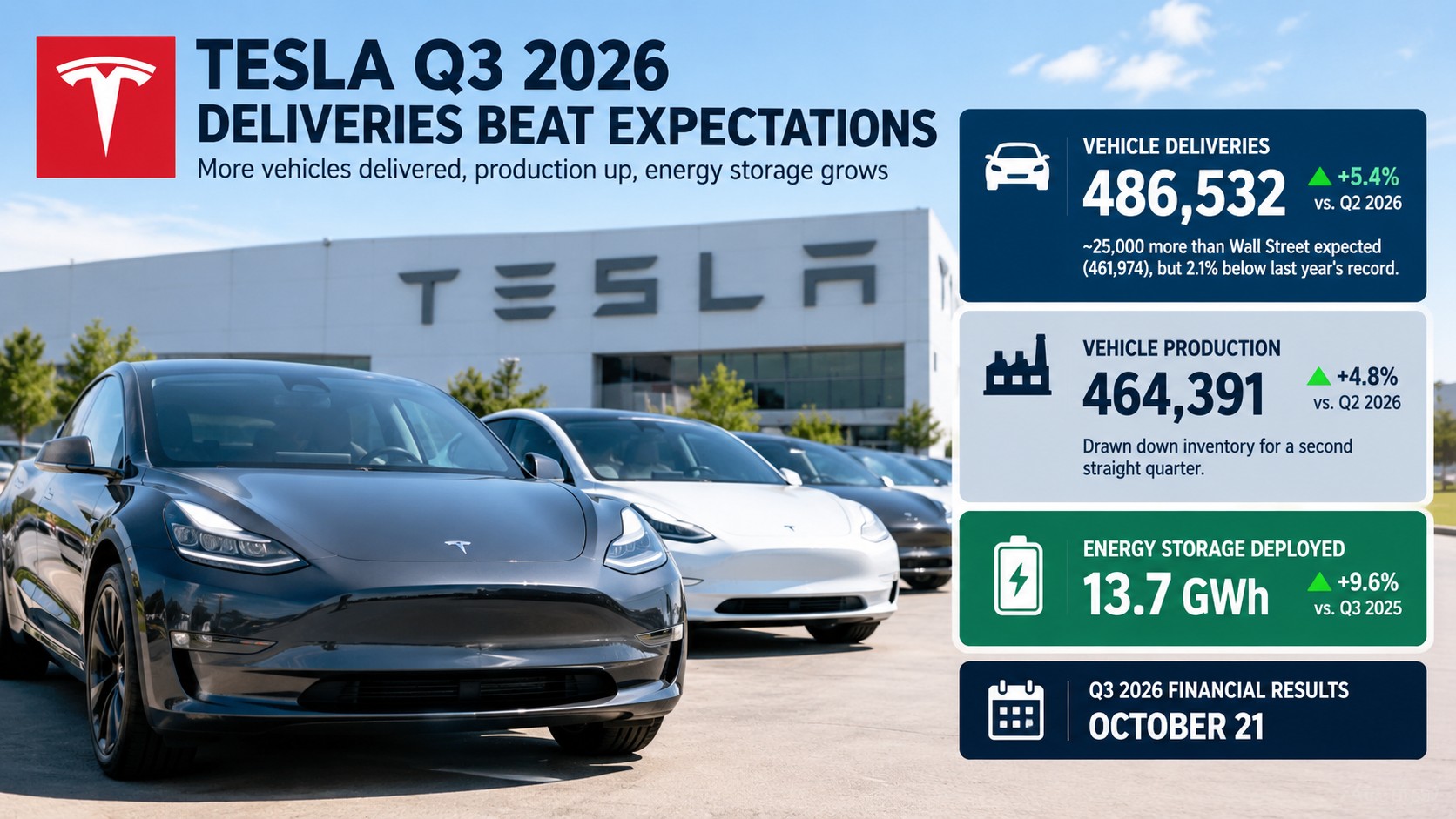
Tesla delivered 486,532 vehicles in the third quarter of 2026, according to a filing released Friday, topping Wall Street's expectations by about 25,000 units. The company's own compiled consensus of 24 analysts called for 461,974 deliveries, while a separate StreetAccount consensus pointed to about 461,100. Deliveries were down 2.1% from the record 497,099 a year earlier but rose from 480,126 in the second quarter.
Production totaled 464,391 vehicles, meaning Tesla delivered roughly 22,000 more cars than it built. That marks the second consecutive quarter of working down inventory and effectively clears the excess of about 50,000 vehicles produced in the first quarter. Lower inventory can support pricing and margins heading into the fourth quarter, though it also means deliveries may be harder to outpace production going forward.
Model 3 and Model Y accounted for the bulk of volume, with 478,237 deliveries on 457,387 units produced. Other models, a category that includes Cybertruck and Semi, delivered 8,295 vehicles from 7,004 produced. Only about 1% of third-quarter deliveries fell under operating lease accounting.
Energy storage was a more mixed picture. Tesla deployed 13.7 GWh in the quarter, up 9.6% from 12.5 GWh a year earlier and above the 13.5 GWh posted in the second quarter. However, that fell short of the 15.9 GWh sell-side consensus compiled by the company, a gap investors will likely ask about on the earnings call.
Expectations had been tempered heading into the report. Some analyst forecasts ranged as low as roughly 435,000 deliveries and as high as 470,000, reflecting a tough comparison with last year's record quarter. The beat therefore arrives against a low bar, although it still leaves Tesla on a path toward a full-year consensus of about 1.77 million deliveries, which would require a strong fourth-quarter push.
The next catalyst is Tesla's full financial report. The company will publish third-quarter results after the market close on Wednesday, October 21, with a live webcast scheduled for 5:30 p.m. Eastern time. Investors will focus on automotive gross margin, operating cash flow and updates on its robotaxi rollout, which launched in three Florida cities in July, following the start of Cybercab production.
The report also lands on a day when lower Treasury yields after a weak jobs report are lifting growth and technology shares broadly, which could amplify any move in large-cap names such as Tesla. Higher-priced consumer discretionary stocks tend to be sensitive to interest-rate expectations, so the rate backdrop remains an important swing factor alongside the company's own execution.
Taken together, the delivery beat is a modest positive for sentiment, but it does not settle questions about profitability, since volume alone does not capture pricing or incentives. Traders will likely treat the report as a setup for the October 21 earnings event rather than a standalone reason to chase the stock.