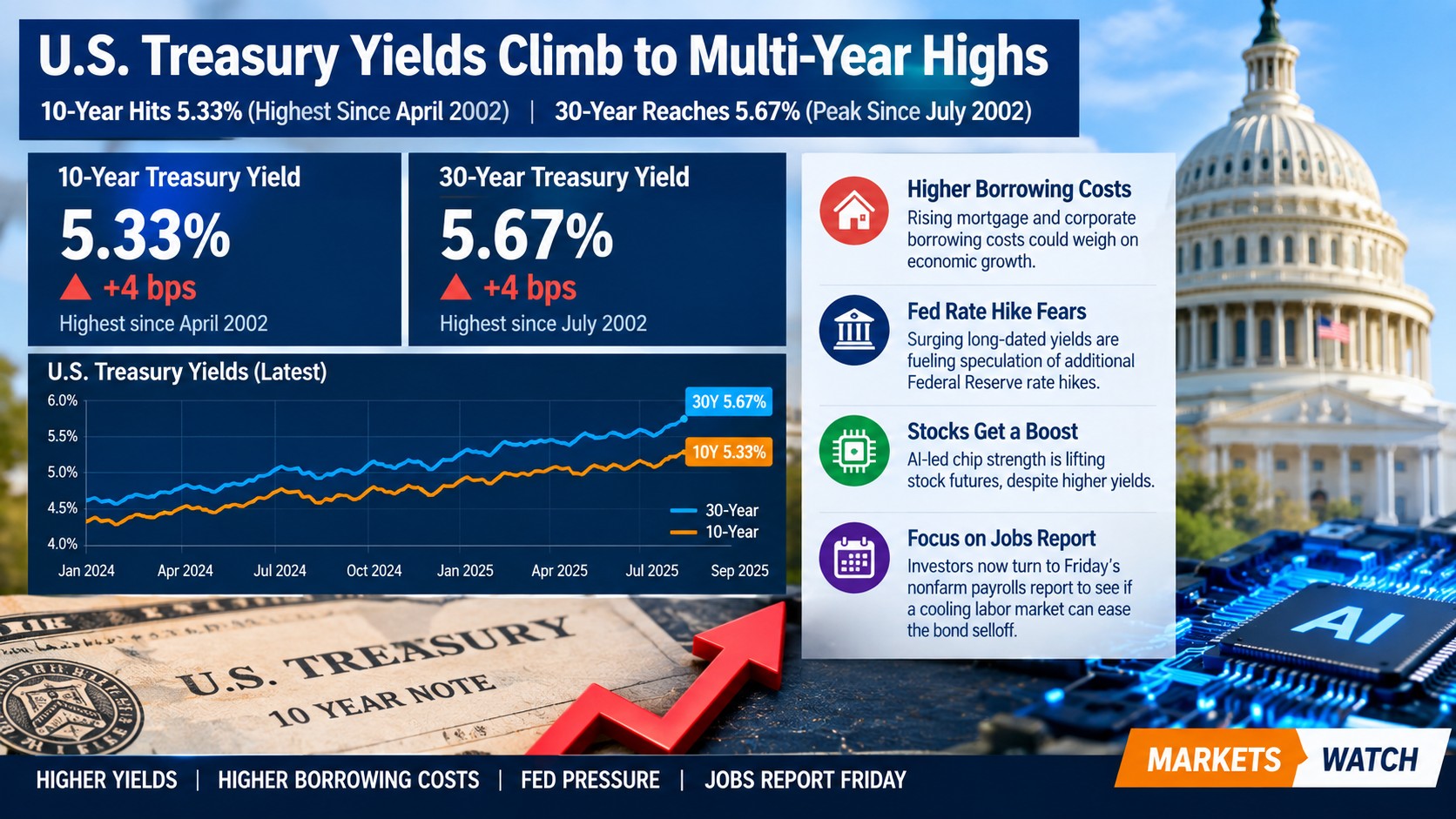
The benchmark 10-year U.S. Treasury yield rose 4 basis points to 5.3338% on Thursday, according to LSEG data, reaching its highest level since April 2002. The 30-year yield climbed 3 basis points to 5.6702%, its highest since July 2002. Yields move inversely to prices, so the rise reflects falling bond values. The move extends a selloff that has dominated trading for weeks and has overshadowed a tech-led bounce in stock futures at the start of October.
Equity futures nonetheless pointed higher. S&P 500 futures gained about 0.3% and Nasdaq-100 futures rose roughly 0.6% as investors bought AI-related stocks after strong chip earnings. On Wednesday, the S&P 500 fell 0.25% to 7,652, the Dow dropped 0.86% to 50,906, and the Nasdaq edged up 0.24% to 26,861. The Dow finished September about 3.5% lower, as soaring oil prices and rising yields stoked fears of additional Federal Reserve rate hikes.
Inflation data have added to the uncertainty rather than resolving it. Annual core PCE inflation came in at 3%, well below the 3.3% forecast, but analysts attributed much of the miss to methodological changes. One strategist said the release left markets in a greater state of uncertainty and policymakers navigating increasingly unreliable data, with market signals suggesting inflation is slipping slightly from central bankers' control.
Energy is the second pressure point. Brent crude jumped about 2.6% to $100.60 a barrel and West Texas Intermediate rose about 2.1% to $92.28 after Chinese refiners suspended exports of oil products, compounding supply strains from the war involving Iran. Higher energy prices feed inflation expectations, which in turn raise the premium bond investors demand to hold long-dated government debt.
Labor data are the next test. Outplacement firm Challenger, Gray and Christmas reported that U.S.-based employers announced 43,281 job cuts in September, down 18% from August, and third-quarter layoff plans of 129,591 were down 43% from the second quarter. Nonfarm payrolls are due Friday. A cooling print could validate the tech-led relief bounce, while sticky wage growth could put bond sellers firmly back in control.
The consequences reach beyond equities. Long-dated yields at multi-decade highs push up mortgage and corporate borrowing costs, raise the discount rate applied to growth stocks, and make cash and short-term Treasuries more competitive with dividend payers. Consumer confidence fell to a 12-year low earlier this week, adding a demand-side risk that sits uneasily alongside tight monetary conditions. Gold futures rose about 0.6% to $4,212.50 an ounce in early trading, a sign some investors are seeking shelter.
For positioning, rate-sensitive areas such as housing-related shares, small caps and long-duration technology remain most exposed if the 10-year yield pushes decisively higher, while short-duration or cash-rich assets look comparatively defensive. Speculative funds have built a large net short position in S&P 500 futures, so a softer jobs print could trigger sharp short covering, whereas a hot one risks another leg higher in yields. Risk management ahead of Friday matters more than conviction.