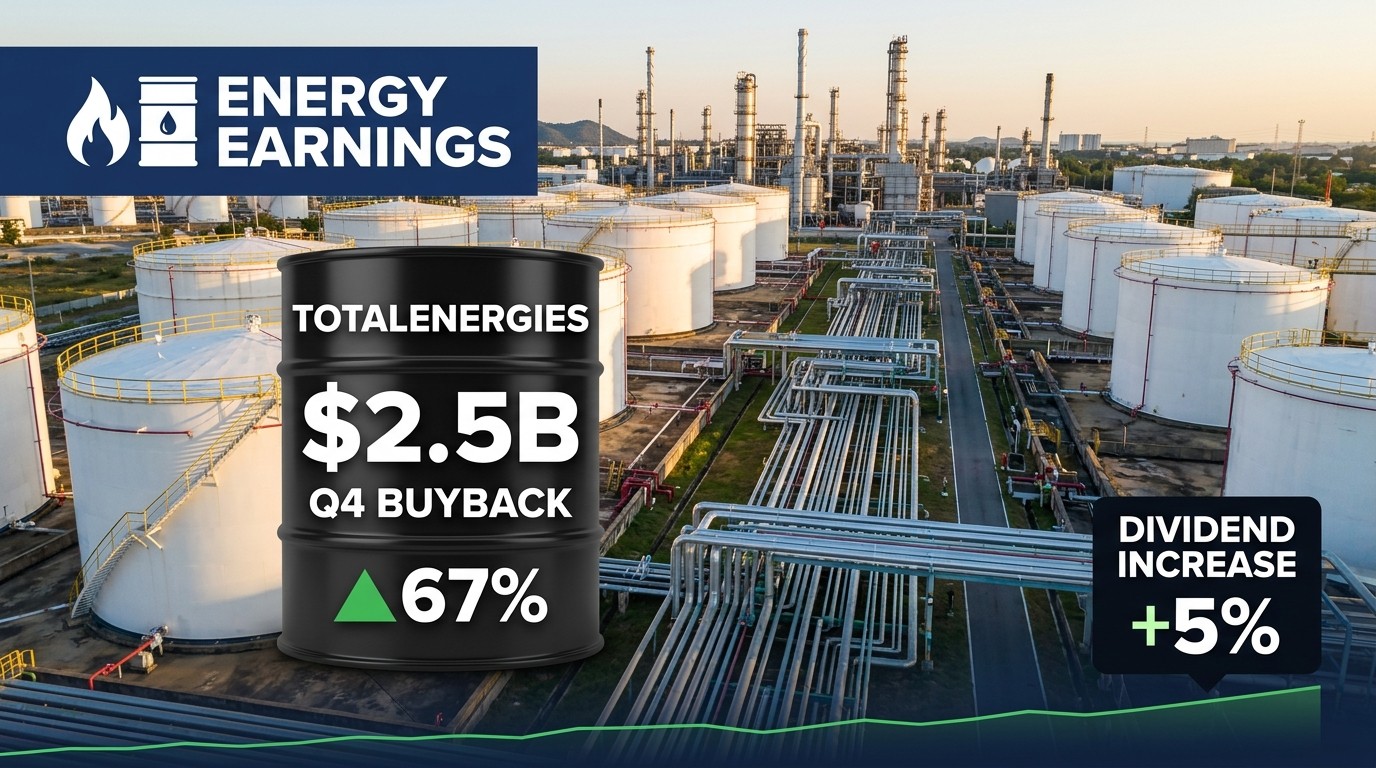
TotalEnergies (TTE) said on Monday it will raise its fourth-quarter 2026 share buyback to $2.5 billion, up from $1.5 billion in recent quarters, and increase its dividend by 5%, reassuring investors that shareholder returns remain on track despite a challenging geopolitical climate. The French energy major also guided to a further step-up in production growth beyond 2030.
The company said it would buy back between $2 billion and $2.5 billion of its shares in the first quarter of 2027, extending the repurchase program into next year. The 67% jump in the quarterly repurchase pace adds $1 billion to the fourth-quarter total, and together with the higher payout signals management confidence in cash generation at a time when crude prices are elevated.
The announcement arrived as oil prices surged. WTI crude futures rose more than 4% to a session high of $96.44 a barrel and Brent traded around $108 after President Donald Trump rejected Iran's latest proposal to reopen the Strait of Hormuz. Energy producers and refiners were among the few areas of strength in early trading while technology and semiconductor stocks declined.
For long-term investors, the guidance on production growth beyond 2030 matters as much as the near-term buyback. Energy majors have faced questions about how to balance shareholder returns with reinvestment as demand forecasts, energy transition spending and geopolitical risk pull in different directions. By raising distributions while promising faster volume growth, TotalEnergies is signaling that it believes it can fund both, a message that tends to be rewarded when the commodity backdrop is supportive.
The risks are largely tied to the same forces that support the stock. A diplomatic breakthrough between the United States and Iran could pull oil prices sharply lower, while reports that President Trump plans to resume bombing after the November 3 midterms suggest the situation remains headline-driven and unpredictable. Windfall-tax proposals, rising costs and a stronger dollar are additional factors that can erode the benefit of higher crude for European producers.
Rates are another consideration. The 10-year Treasury yield rose about 7 basis points to roughly 5.23%, and income-oriented investors comparing dividend yields with government bond yields may demand more from equities. A dividend increase of 5% helps on that front, while buybacks add support to per-share earnings and cash flow over time.
For a portfolio positioned around today's news, energy exposure is one of the few areas with a clear tailwind, though investors should be aware that gains built on a geopolitical premium can reverse quickly. TotalEnergies offers a combination of commodity leverage and capital returns that may appeal to investors seeking a hedge against inflation-driven risk while technology valuations are under pressure. Staged entries and defined risk limits remain prudent, particularly ahead of Wednesday's core PCE inflation reading and Friday's jobs report.