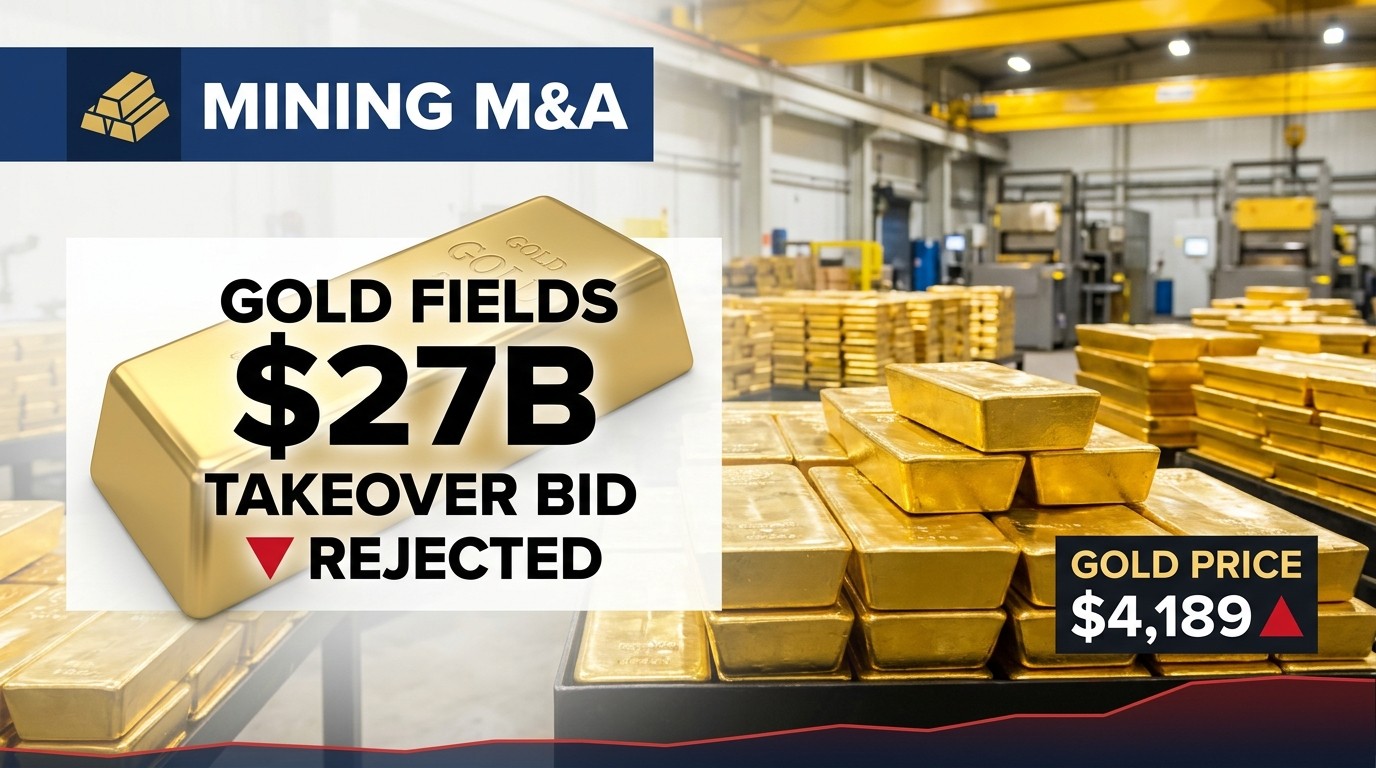
Gold Fields (GFI) shares fell on Monday after Northern Star Resources (NESRF) rejected its takeover proposal, saying the offer materially undervalued the Australian gold miner. The approach, valued at roughly $27 billion, would have marked a major consolidation move in the gold mining sector and put a spotlight on how producers are using scale to respond to a volatile bullion market.
Under the terms of the proposal, Gold Fields offered 0.3125 of its own shares plus A$7.25 in cash for each Northern Star share, an offer that initially valued the target at A$38.7 billion. Northern Star was unambiguous on price, describing the terms as materially undervaluing the company. The rebuff leaves several paths open, including a raised bid, a direct appeal to Northern Star shareholders, or a decision by Gold Fields to step back from the pursuit.
The decline in Gold Fields shares may reflect investor wariness about a large stock-and-cash acquisition. In an offer partly paid in the acquirer's own scrip, a lower Gold Fields share price reduces the value delivered to target shareholders, which can make an agreed deal harder to reach without a higher exchange ratio or more cash. Buyers also face dilution and integration costs, and acquirer shares often come under pressure when a bid looks likely to require a higher price.
The market backdrop complicates the picture. Gold futures fell about $132 an ounce to near $4,189 on Monday as the dollar and Treasury yields bounced, with the 10-year yield rising about 7 basis points to roughly 5.23% after President Donald Trump rejected Iran's latest proposal on the Strait of Hormuz. Higher yields raise the opportunity cost of holding non-yielding bullion and can weigh on gold-mining equities, even when a geopolitical shock might otherwise support safe-haven demand.
For Northern Star, the rejection positions management to argue that any successful transaction must include a meaningful premium beyond the initial terms. Its shares trade in the United States over the counter under the ticker NESRF, where liquidity can be thin and quotes can move sharply on headlines, so U.S.-based investors should be cautious about execution when trading around deal news.
What to watch next: whether Gold Fields issues a public response or raises the offer, whether other suitors emerge for either company, how large institutional shareholders react, and whether bullion prices stabilize. An unsolicited path can extend timelines and increase costs, while a sweetened, board-recommended offer would probably remove much of the uncertainty.
For portfolio positioning, the situation is an event-driven setup with asymmetric information. Gold Fields holders face headline risk in both directions, while Northern Star holders have seen a takeover premium put on the table, even though it was rejected. Investors should avoid chasing moves on incomplete information and keep in mind that a falling gold price and rising yields are working against the sector at the same time.