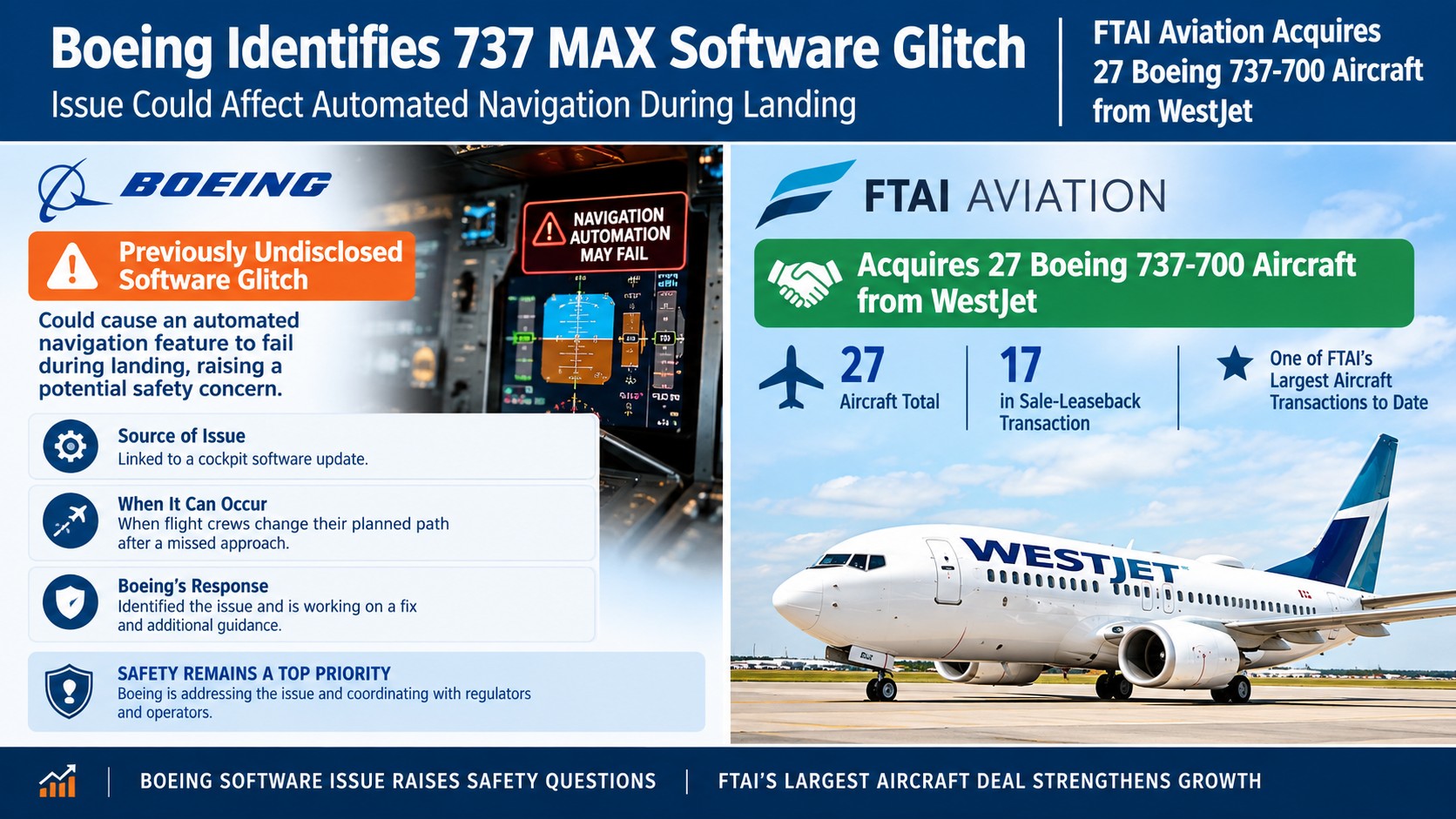
Boeing (BA) has identified a previously undisclosed software glitch in its 737 MAX that could cause an automated navigation feature to fail, prompting concerns about a potential safety risk while aircraft are landing. The company acknowledged the problem, which had not been publicly disclosed before Monday, and which emerged from a cockpit software update.
According to the details reported, the fault can occur when flight crews alter their planned flight path following a missed approach, a routine but high-workload maneuver in which pilots abort a landing and go around. Boeing has not, in the information available, quantified how many aircraft are affected or specified a timeline for a fix, and it is unclear whether regulators will require operational restrictions, a software patch or additional pilot procedures in the interim.
The disclosure lands at a sensitive moment for the planemaker. The 737 MAX program has been under intense scrutiny since two fatal crashes in 2018 and 2019 led to a global grounding, and any new software-related safety issue tends to draw immediate attention from aviation authorities, airlines and investors. A software update that alters flight-management behavior after a missed approach may be manageable if it is patched quickly, but the reputational cost and the potential for delivery disruption are what equity investors will weigh first.
Elsewhere in the aviation supply chain Monday, FTAI Aviation (FTAI) said it acquired 27 Boeing 737-700 aircraft from WestJet in one of its largest aircraft transactions to date. Under the deal, FTAI's 2026 SPV, the second investment vehicle of its Strategic Capital business, bought 17 of the jets in a sale-leaseback with WestJet as lessee. The 737-700 belongs to the earlier Next-Generation family rather than the MAX, so the glitch does not directly affect those aircraft, but the transaction underscores continued interest in narrowbody lease and parts assets as airlines manage their fleets.
Market context is unfavorable. Futures for the S&P 500 fell about 0.6% and the Nasdaq about 1% as crude rose more than 4% and the 10-year yield reached roughly 5.23%. Airlines and aircraft lessors are exposed to fuel costs and financing rates, and Boeing itself is a capital-intensive business with substantial debt, for which higher yields matter. The combination of a safety headline and a rising-rate backdrop makes the stock vulnerable to further pressure until the scope of the software problem is clearer.
What to watch: statements from the Federal Aviation Administration or other regulators on whether an airworthiness directive follows, any guidance from Boeing on remediation timing, and reaction from airline customers. For FTAI, the focus is on financing and returns on the WestJet portfolio and whether higher borrowing costs affect the economics of leasing deals. Investors should treat the Boeing headline as an event-risk situation in which the magnitude of the impact depends on how quickly a fix is certified.
For portfolio managers, the balanced approach is to avoid adding to Boeing exposure until more disclosure emerges, while recognizing that lessors with diversified older-generation fleets may hold up better than manufacturer-dependent names if the MAX issue lingers. Position sizing should reflect the binary nature of any regulatory response.