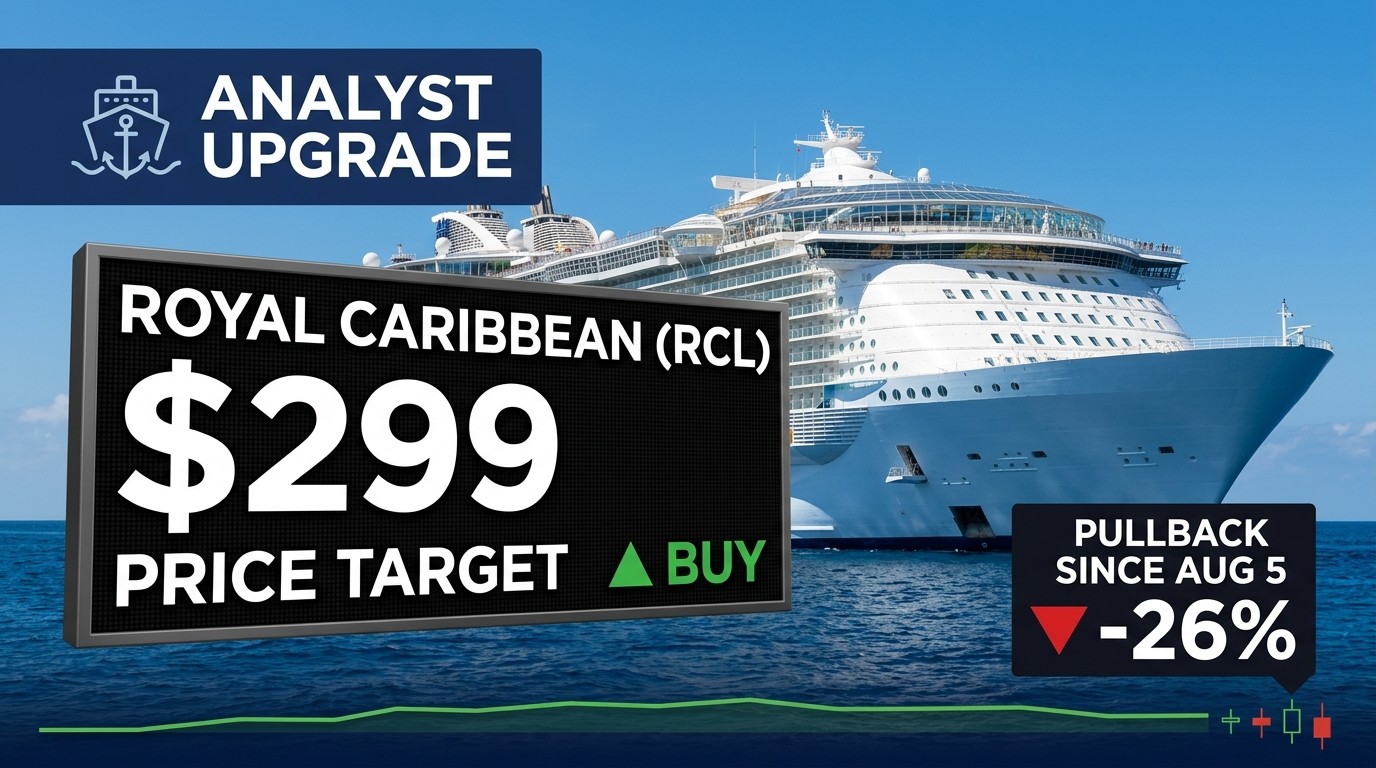
Royal Caribbean (RCL) was upgraded to Buy from Hold at Deutsche Bank (DB) on Monday, with the bank leaving its price target unchanged at $299 and arguing that the stock's 26% pullback since August 5 offers a considerably more favorable risk/reward. The upgrade is a valuation call: with the target unchanged, the analysts are effectively saying that the share price has fallen toward levels that better compensate investors for the risks they face.
According to the bank, the shares have fallen amid rising oil prices and concerns about the durability of Royal Caribbean's yield growth, a measure of revenue earned per passenger cruise day that the market has treated as a key driver of earnings for cruise operators. When investors doubt that pricing power can continue, multiples tend to compress quickly, which is what the pullback since early August suggests has happened.
Oil is the most immediate variable. Fuel is one of the largest operating costs for cruise operators, and crude has been rising sharply. WTI futures jumped more than 4% on Monday to as high as $96.44 a barrel and Brent traded around $108 after President Donald Trump rejected Iran's latest proposal to reopen the Strait of Hormuz. Reports that the president plans to resume bombing Iran after the November 3 midterms suggest that the geopolitical premium in energy prices may not fade soon, which keeps pressure on fuel-sensitive industries.
Interest rates are a second headwind. The 10-year Treasury yield rose about 7 basis points to roughly 5.23%, and mortgage rates are above 7%, a combination that can squeeze discretionary budgets and raise financing costs for capital-intensive companies that carry significant debt. Cruise operators are particularly exposed to both channels, since they depend on consumer demand for premium travel and on financing to fund fleet expansion.
The upgrade does not remove those risks. Geopolitical events can affect itineraries and consumer sentiment, and a further leg higher in oil would challenge the thesis that valuation has already absorbed the bad news. The unchanged $299 target also means the case rests on the price falling rather than on improved fundamentals, so a continued slide in the stock could test the conviction of new buyers.
What to watch: the trajectory of crude oil and the 10-year yield, Wednesday's core PCE inflation reading, Friday's September jobs report, and any company commentary on bookings and pricing. Additional analyst moves, either following Deutsche Bank's lead or defending prior cautious stances, could also influence near-term flows.
For portfolio positioning, Royal Caribbean is a high-beta proxy on oil, rates and consumer confidence. Contrarian investors may view a 26% decline as an opportunity, but staged entries and clear risk limits are sensible in a session where futures are lower and volatility is rising. A move in oil below recent highs, or a stabilization in yields, would likely be the trigger that validates the upgrade.