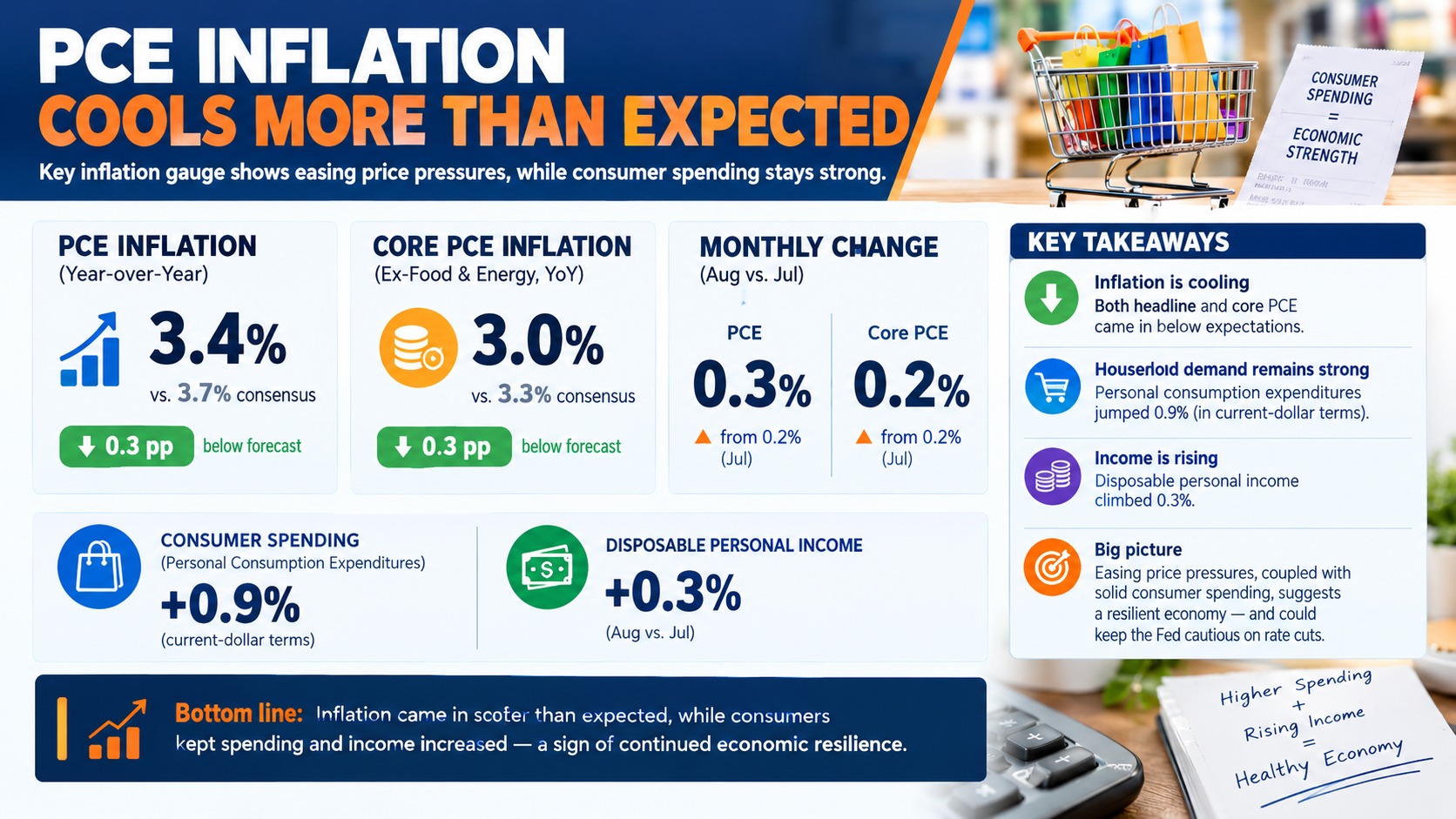
The Commerce Department’s Bureau of Economic Analysis reported Wednesday that the Personal Consumption Expenditures price index, the Federal Reserve’s preferred inflation gauge, increased 3.4% in the 12 months through August. That reading came in softer than the 3.7% consensus forecast and reflected a downward revision to the prior month’s figure. Core PCE, which strips out the more volatile food and energy components, rose 3.0% year-over-year, also below the 3.3% expectation that had been widely anticipated by economists surveyed ahead of the release.
On a monthly basis, the headline PCE price index advanced 0.3% while the core measure rose 0.2%. Energy goods and services contributed meaningfully to the monthly gain, with gasoline prices climbing 4.4% and transportation services accelerating. Goods and services prices each increased 0.3%. Real personal consumption expenditures rose 0.6% after a strong 0.9% jump in current-dollar spending, driven by robust outlays on both goods and services categories. Personal income increased $66.6 billion, or 0.2%, and disposable personal income rose 0.3% in August.
The data arrive against a backdrop of elevated long-term Treasury yields that recently touched multi-decade highs and persistent concerns that sticky oil prices linked to ongoing Middle East tensions could keep inflation above the Federal Reserve’s 2% target for an extended period. Markets had been pricing roughly even odds of another quarter-point rate increase at the October FOMC meeting in the hours leading up to the release. Softer-than-expected inflation readings typically ease pressure on the central bank to tighten further and can provide support for equity valuations, particularly for rate-sensitive growth sectors that have faced headwinds from rising yields throughout September.
Consumer spending strength, however, underscores continued economic resilience that could still complicate the path back to the inflation target. The combination of cooler price pressures and solid demand paints a mixed but constructive picture for risk assets in the near term, provided yields continue to stabilize following the data. Real final sales to private domestic purchasers, a metric closely watched by Fed officials as a gauge of underlying demand, also showed strength in related revisions. Investors will next focus on Friday’s official employment report from the Labor Department and any additional commentary from Federal Reserve officials for further confirmation of the policy outlook heading into the final months of the year.
Market participants noted that the methodological updates incorporated by the Bureau of Economic Analysis, including adjustments to prices for software, portfolio management fees, and legal services, contributed to some of the downward revisions in the historical series. These changes, which extended back several years, helped produce a lower trajectory for both headline and core measures than had previously been reported. The result is a somewhat more favorable inflation backdrop than the market had been bracing for, even as energy-related pressures remain visible in the monthly detail. Equity futures reacted positively in the immediate aftermath, with major index contracts extending gains as the probability of an October rate hike slipped further according to fed-funds futures pricing.
Looking ahead, the softer PCE print reduces the urgency for additional policy tightening in the near term while still leaving the door open for further action if subsequent data reverse the progress. The Federal Reserve has emphasized its data-dependent approach, and the combination of cooling inflation with resilient spending will be carefully weighed against labor-market developments later this week. For portfolio positioning, the immediate implication is a potential relief rally in duration-sensitive assets and technology names that have been pressured by the recent rise in long-term yields, though volatility is likely to remain elevated until the full employment picture becomes clearer on Friday.