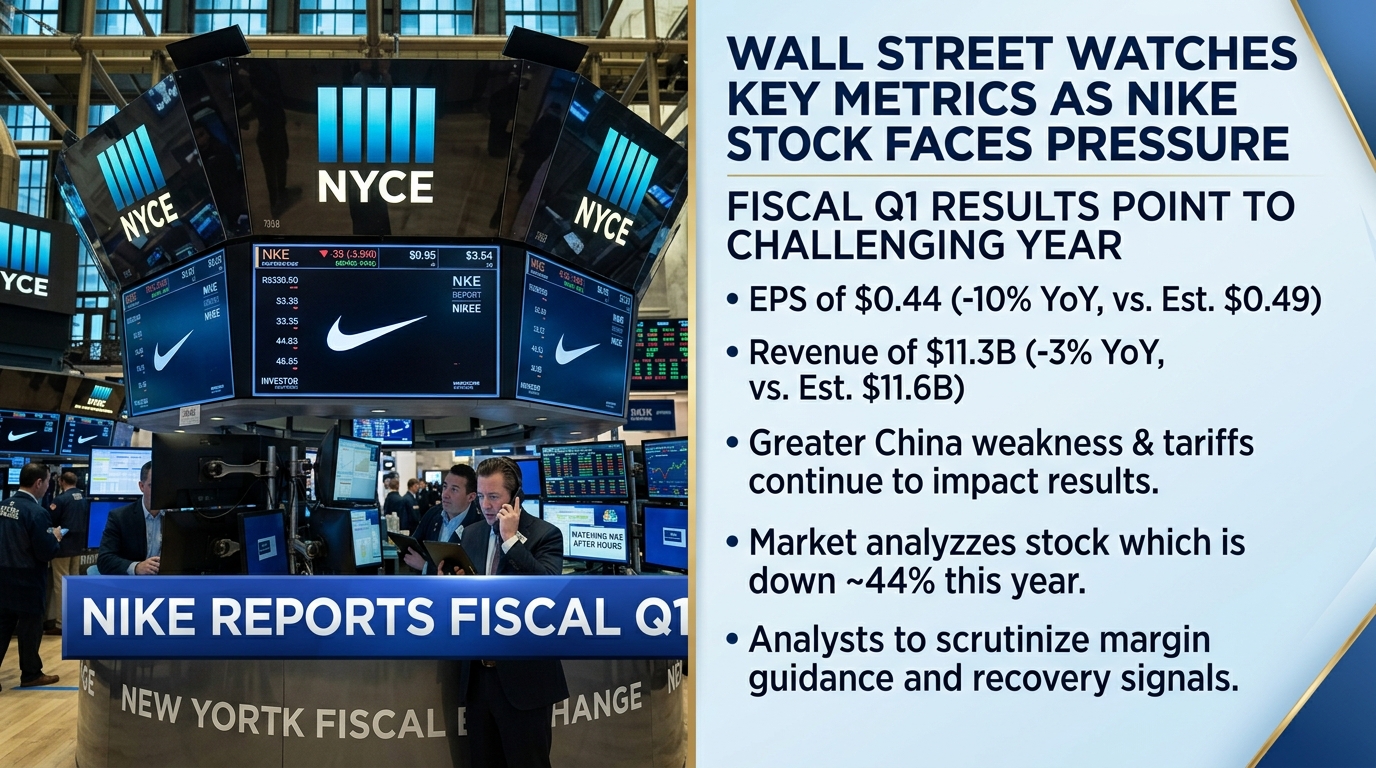
Nike (NKE) is scheduled to report first-quarter fiscal 2027 results after the market close on Thursday, October 1, with investors looking for evidence that the turnaround under CEO Elliott Hill is gaining traction. Shares were down 0.42% in early trading and have fallen about 44% year to date, leaving the stock near $35, far below the roughly $180 high reached in November 2021.
Consensus calls for earnings of about $0.44 per share on revenue of roughly $11.3 billion, according to analyst compilations. That implies a decline of about 10% in earnings and a revenue drop of roughly 3% from a year earlier. Estimates have drifted lower over the past 90 days, and the range of analyst earnings forecasts runs from $0.38 to $0.50, reflecting meaningful disagreement about the quarter.
The company has said revenue is likely to decline through the first half of fiscal 2027, so the bar for the top line is low. Attention is on Greater China, where analysts expect a double-digit sales decline, and on gross margin, where management has said expansion should begin in the first quarter despite tariff costs and heavy promotional activity. Digital demand has also been soft.
Earnings quality is another focus. A one-time tariff refund of nearly $986 million was recorded earlier this year after the Supreme Court struck down many of the administration's global tariffs, which flattered reported results and is not expected to repeat. Investors will therefore look past headline per-share numbers to underlying margins, inventory levels and cash generation.
Management may wait until its November investor day to give complete fiscal 2027 guidance, but a new chief financial officer, David Denton, could use the call to adjust expectations. The shares trade at roughly one times revenue, their cheapest level in decades, which some analysts view as the only bullish aspect given continued estimate cuts and limited near-term catalysts.
Sentiment toward the stock is deeply bearish, which can make positive surprises outsized. At the same time, the macro setting is difficult: the 10-year Treasury yield is at its highest since 2002, consumer confidence fell to a 12-year low earlier this week, and oil near $100 a barrel is raising costs for households. Those factors argue against assuming a quick rebound in discretionary spending.
For paper-trading purposes, the setup is binary. A clean beat with improving margins and a stabilizing China outlook could trigger a sharp short-covering rally, while a guidance cut would likely extend the slide. Because the report lands after the bell, any trade is an overnight gap risk, and position size should reflect that. Investors who prefer not to hold through the print can wait for Friday's open, when the reaction and the jobs report will arrive together.