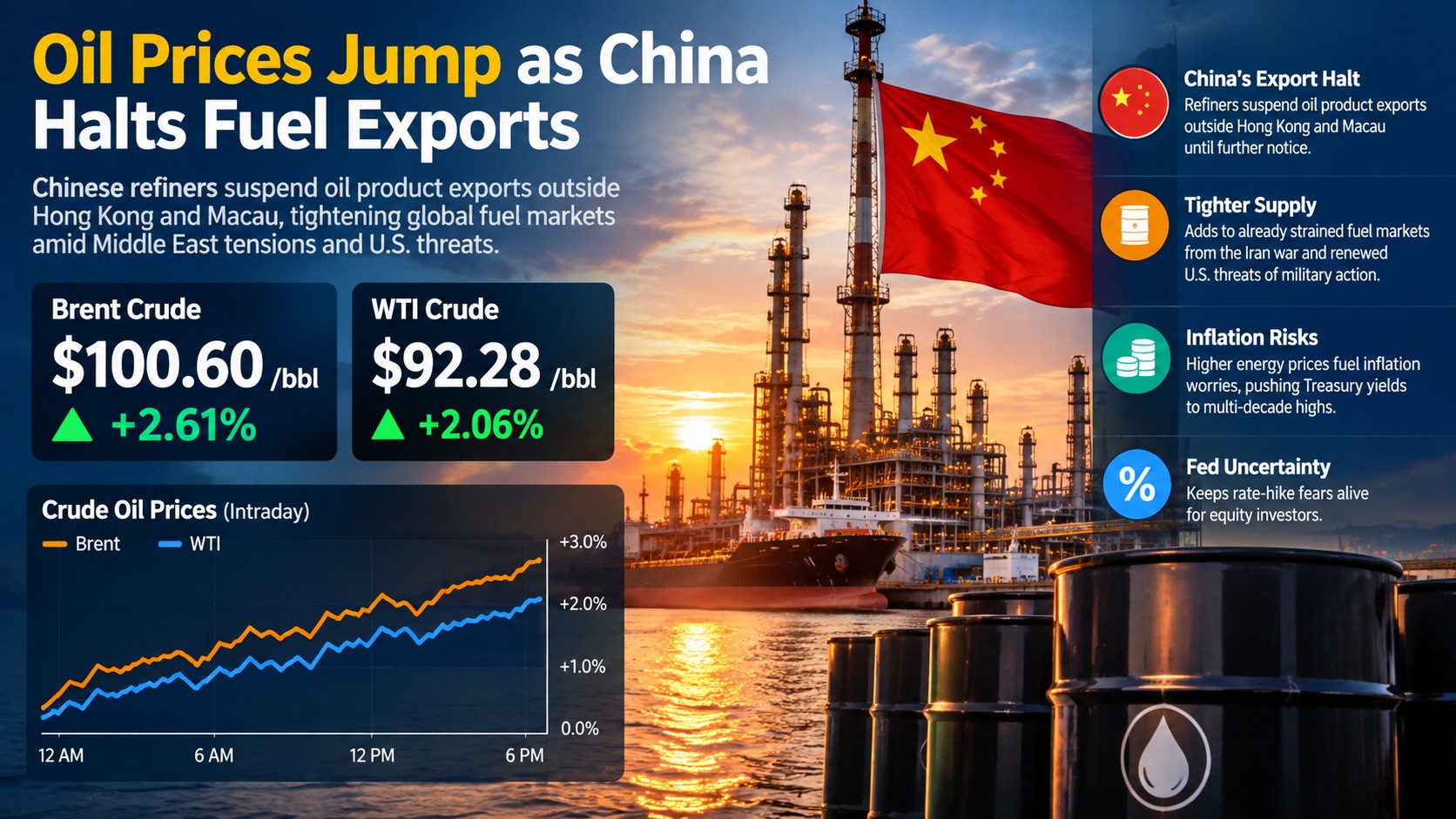
Oil prices climbed on Thursday as Chinese refiners suspended exports of oil products, tightening fuel markets already constrained by the war involving Iran. Brent crude jumped 2.61% to $100.60 a barrel, while West Texas Intermediate surged 2.06% to $92.28, according to market data on the first trading day of October. China and Hong Kong equity markets were closed for National Day holidays, limiting price discovery in Asia.
The suspension covers shipments to destinations outside Hong Kong and Macau and will remain in place until further notice, according to a wire report citing four people briefed on the matter. A bank analyst said the export ban suggests concern about domestic product availability, adding that it remains to be seen whether the measures will support higher crude imports after recent drawdowns in Chinese crude and fuel inventories.
Geopolitics continues to add risk. President Donald Trump doubled down on threats to annihilate Iran in a magazine interview, saying it is possible the U.S. could resume attacks after the midterm elections, and noted that 18 U.S. service members have been killed in the conflict. Earlier this week, stocks fell after Trump rebuffed an Iran peace deal, and oil prices rose.
Energy has become the dominant macro variable for equities. September was marked by soaring oil prices and a surge in Treasury yields, with the Dow ending the month about 3.5% lower. The 10-year Treasury yield rose to about 5.33% on Thursday, its highest level since April 2002, as investors worried that elevated energy costs would push inflation higher and force the Federal Reserve to raise rates. One market strategist said in early September that oil is the key driver for the market.
Employers are also feeling the strain. Outplacement firm Challenger, Gray and Christmas said U.S.-based employers announced 43,281 job cuts in September, down 18% from August, but its chief revenue officer pointed to high energy costs, an uncertain war in Iran, the prospect of a rate hike and likely surging healthcare costs as reasons companies are in a wait-and-see period. Consumer confidence fell to a 12-year low earlier this week.
For equity investors, higher crude is a rotation signal rather than a uniform negative. Energy producers and oilfield service names typically benefit from sustained prices above $90, while airlines, cruise operators, chemical makers and consumer discretionary companies face margin pressure from fuel and transportation costs. Refined-product tightness may also widen refining margins in regions that continue to export. The effect on the broader market works mainly through inflation expectations and bond yields, which are already at multi-decade highs.
Traders will watch whether China's export halt is extended, how Brent behaves around the $100 level, and Friday's nonfarm payrolls report. Gold futures rose about 0.6% to $4,212.50 an ounce and silver gained 1.62% to $61.55 in early trading, consistent with demand for hedges. With so many event risks stacked up, position sizing and stop discipline matter more than directional conviction today.