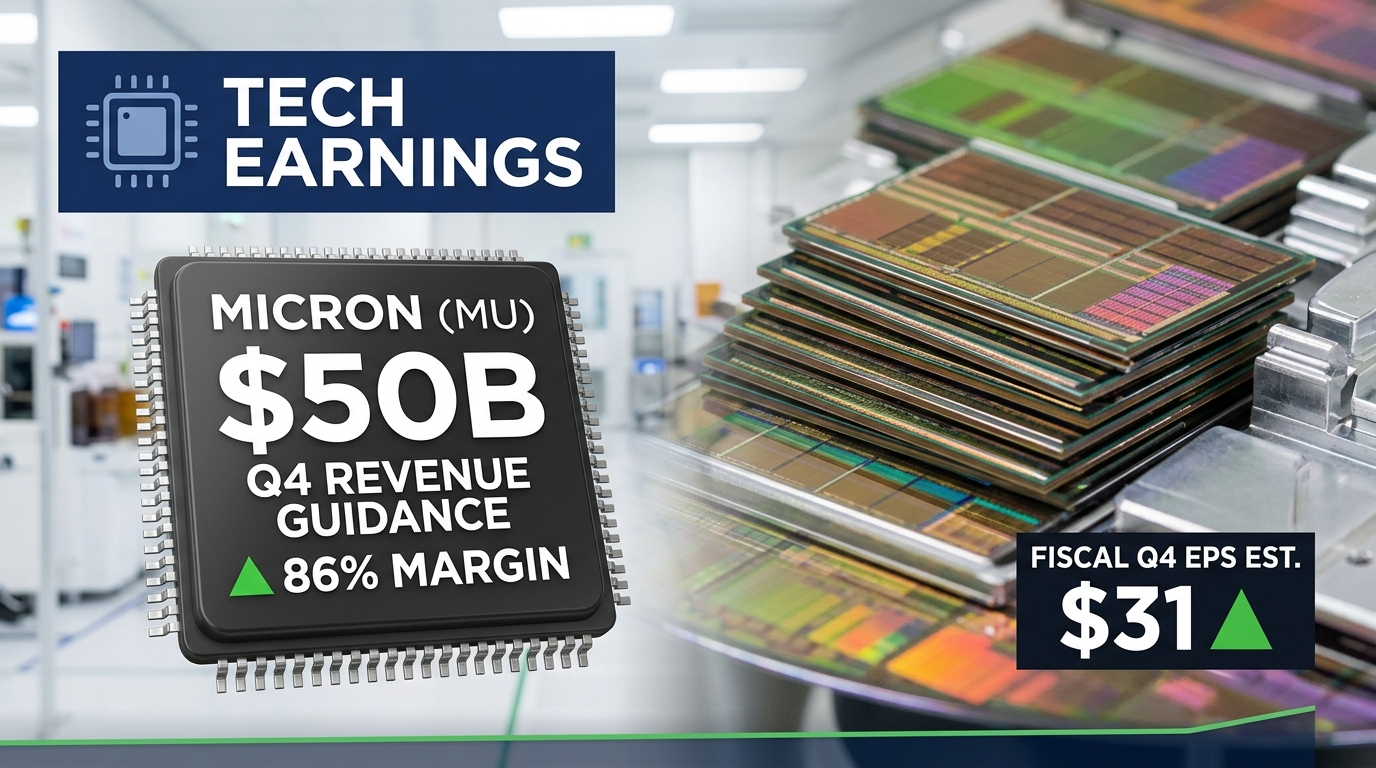
Micron Technology is due to report fiscal fourth-quarter 2026 financial results after the closing bell on Wednesday. Management previously guided for revenue of approximately $50 billion, plus or minus $1 billion, with gross margins near 86% and non-GAAP earnings per share around $31. The outlook builds directly on a third-quarter performance that delivered record revenue of $41.46 billion, up more than 340% year-over-year, and non-GAAP diluted earnings per share of $25.11 that substantially exceeded consensus estimates at the time.
Demand for high-bandwidth memory used in artificial-intelligence accelerators remains the primary growth driver for the company. Micron has repeatedly highlighted tight supply conditions across the industry, the signing of multi-year strategic customer agreements that include significant cash deposits, and ongoing capacity expansion plans intended to meet demand that currently outstrips available supply. Investors will scrutinize management commentary on pricing trends, HBM shipment volumes, customer inventory levels, and capital expenditure plans for the coming fiscal year when results are released.
The semiconductor memory sector has been one of the clearest beneficiaries of the artificial-intelligence infrastructure build-out. A strong print accompanied by constructive forward guidance would reinforce the durability of the AI hardware cycle and could support valuations across related names. Conversely, any signs of demand digestion, softer pricing, or margin pressure relative to the elevated levels achieved in recent quarters could prompt a re-rating of the group. Shares of Micron have experienced notable volatility in recent sessions amid broader market sensitivity to interest-rate expectations and technology valuations.
Beyond the headline revenue and earnings figures, attention will focus on the company’s assessment of the supply-demand balance into calendar 2027 and any updates to longer-term capacity or technology roadmaps. Prior commentary has pointed to full booking of advanced HBM products through 2027 with demand visibility extending further, as well as plans for substantial capital spending to expand production. The results land on the final trading day of September, a historically challenging month for equities, adding to the potential for outsized moves in the after-hours session and into Thursday’s open.
Market participants will also parse any remarks on competitive dynamics, geographic demand trends, and the pace of transition to next-generation memory technologies. The broader context includes elevated Treasury yields and ongoing uncertainty about the Federal Reserve’s policy path, factors that have weighed on growth-oriented technology stocks even as fundamental demand for AI-related hardware has remained robust. A clean beat and raise could provide a positive catalyst for the semiconductor complex, while any disappointment on guidance would likely amplify existing concerns about valuation and cyclical risks.
Overall, the Micron report stands as one of the more closely watched corporate events of the week, offering a high-profile check on whether the extraordinary growth trajectory in AI memory can be sustained into the new fiscal year. Positioning ahead of the release has reflected both optimism about structural demand and caution stemming from the macro backdrop of higher yields and mixed economic data.