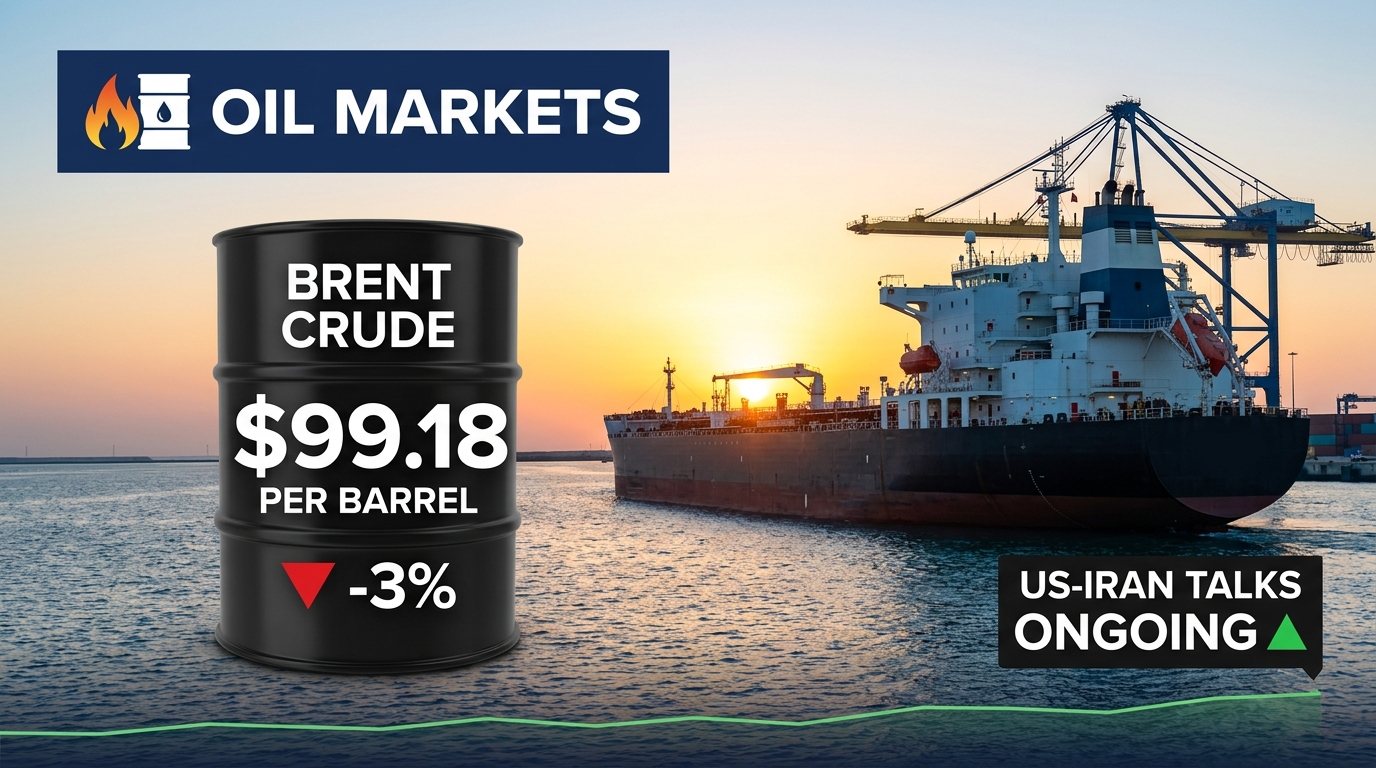
Oil prices extended their pullback into Wednesday's session, with Brent crude futures trading near $99.18 a barrel after tumbling more than 3% the previous session, as investors weighed improving oil flows out of the Gulf against tentative signs of a diplomatic thaw between Washington and Tehran. West Texas Intermediate crude slid to a three-week low, providing a modest reprieve from months of elevated energy prices tied to the ongoing US war with Iran.
The move followed remarks from President Trump, who told reporters that US officials had held a "very good" meeting with Iranian counterparts on the sidelines of the United Nations General Assembly in New York. That came just hours after Trump used his UN address to warn he could take severe action against Iran if Tehran did not agree to a deal ending the conflict, illustrating the mixed signals still shaping sentiment in energy markets. Trump added that a further round of talks between US and Iranian officials would take place in the near future.
The war, now approaching its seven-month mark, has been a persistent source of volatility for crude markets throughout 2026, alternating between sharp spikes on supply-disruption fears and equally sharp pullbacks whenever diplomatic progress appears possible. Wednesday's price action suggests traders are, for now, leaning toward the more optimistic scenario, even as the underlying conflict remains unresolved.
The retreat in oil prices carries broader implications for the US economy and equity markets. Falling energy costs help ease headline inflation readings, a dynamic that could give the Federal Reserve additional room to maneuver on interest rates in the months ahead. Lower crude prices also reduce input costs for a wide range of industries, from airlines to consumer goods manufacturers, while easing pressure on household budgets already strained by elevated prices elsewhere in the economy.
Equity investors have taken notice. The pullback in oil and a related easing in long-dated Treasury yields have been cited by strategists as key tailwinds behind this week's rally in growth and technology stocks, with the Nasdaq Composite closing at a record high Tuesday partly on the back of the improved macro backdrop. Bond markets have stabilized alongside the move in crude, further supporting risk appetite across asset classes.
Energy traders will be watching closely for any concrete outcomes from the next round of US-Iran talks, as well as developments from Thursday's summit between President Trump and Chinese leader Xi Jinping, given China's role as one of the world's largest crude importers. Any signs that diplomatic momentum is stalling, or that the conflict is escalating again, could quickly reverse this week's decline and reintroduce volatility into what has otherwise been a supportive backdrop for US equities.