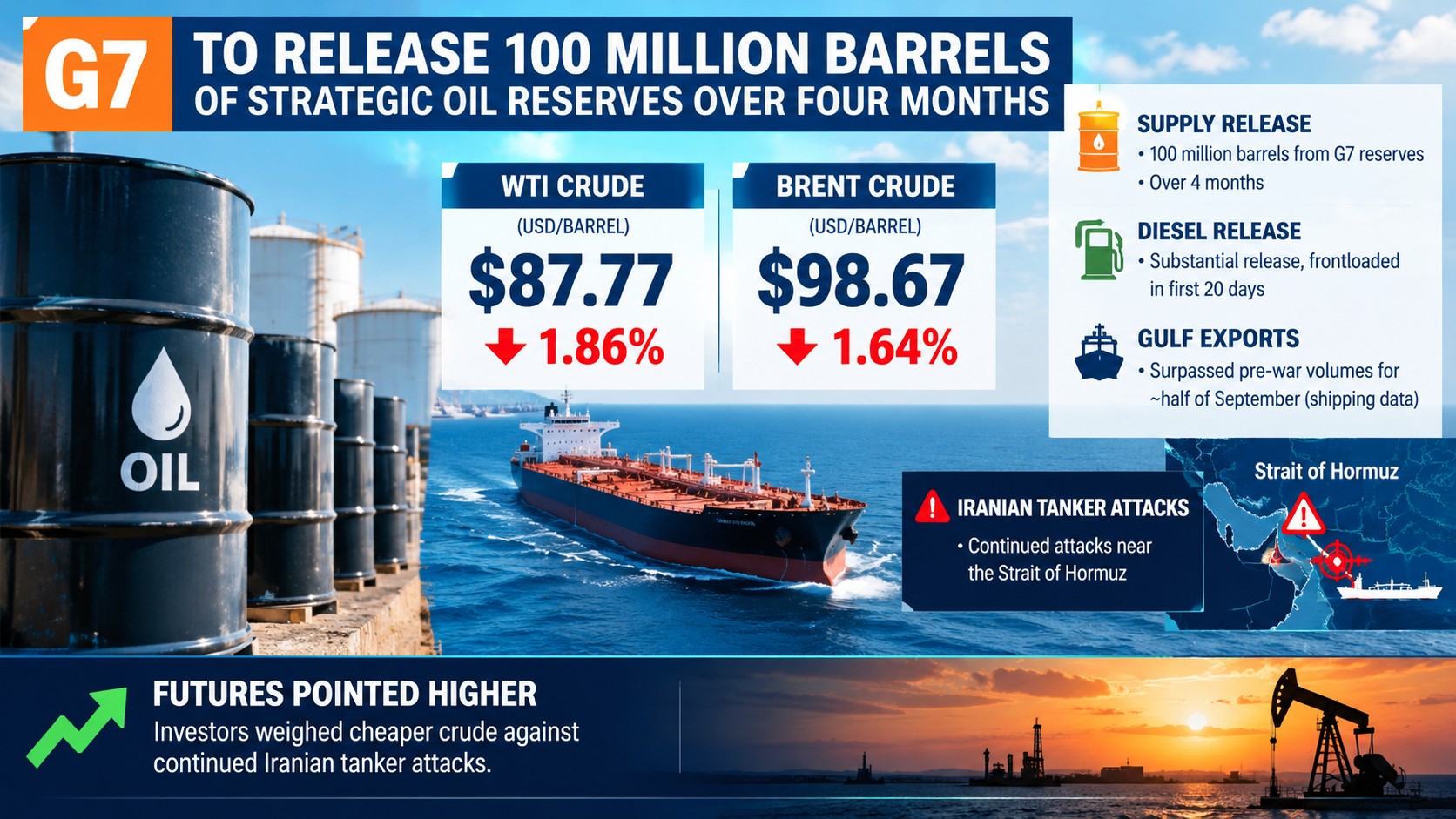
The Group of Seven nations announced a coordinated release of 100 million barrels of strategic oil reserves on Tuesday, a move that pulled crude prices lower and helped U.S. stock futures extend a rally that lifted the Nasdaq to a record close on Monday. West Texas Intermediate crude fell 1.86% to $87.77 per barrel in early trading, while Brent dropped 1.64% to $98.67.
In a joint statement, G7 leaders said the reserves will be deployed over the next four months, with a substantial diesel release frontloaded within the first 20 days. The emphasis on diesel is notable because fuel costs have become a pressure point for the U.S. economy. The national average price of diesel topped $6 a gallon in September for the first time ever, as supply disruptions tied to the conflicts in Ukraine and Iran pushed transportation costs higher.
Supply data offered additional relief. Shipping data showed Gulf oil exporters surpassed pre-war levels for roughly half of September, suggesting more crude is flowing out of the Middle East. An energy-market analyst estimated that Americans are spending about $700 million more per day on gasoline and diesel than they did a year ago, underscoring why policymakers are acting.
Washington is also moving on the demand side. President Donald Trump signed an executive order Monday evening temporarily allowing cheaper red-dyed diesel, typically reserved for farm and off-road use, to be used more broadly and deferring related taxes through the end of the year. Dyed diesel is exempt from the 24.4-cent-per-gallon tax applied to highway diesel.
Risks remain. Iran has stepped up attacks on tankers moving through the Strait of Hormuz, with nearly 20 commercial ships coming under attack over the past month, according to the Joint Maritime Information Center. Maritime intelligence analysts estimate Iran attacked roughly two ships for every 100 vessels crossing the strait in the third quarter. Flows now depend on a U.S. military commitment to protect tankers along a southern route near Oman, and it is unclear how long the export rebound can last without a negotiated settlement.
For equity investors, the oil move intersects with a bond market under strain. The 10-year Treasury yield touched levels last seen in 2002, topping 5.3%, and the 30-year yield breached 5.7% at one point, its highest in 24 years. Easing crude can reduce the inflation fears that keep yields elevated, which is why the G7 action matters well beyond energy stocks.
Analysts say earnings, not just rates, are carrying the market. A senior analyst at Capital.com noted that the tech-led rally has focused attention on extraordinary AI-driven profit growth. Earnings growth estimates for the upcoming reporting season have been revised up to nearly 30%, following roughly 50% growth in the second quarter. Gold futures rose 0.71% to $4,186.20 an ounce and silver edged up 0.16% to $61.31, signaling that haven demand has not disappeared.
Traders will watch weekly employment data and the trade balance report for further cues, with the oil complex remaining the key swing factor for yields and risk appetite. The reserve release is temporary, and a durable decline in prices likely depends on improved security in the Strait of Hormuz rather than on stockpile draws alone.