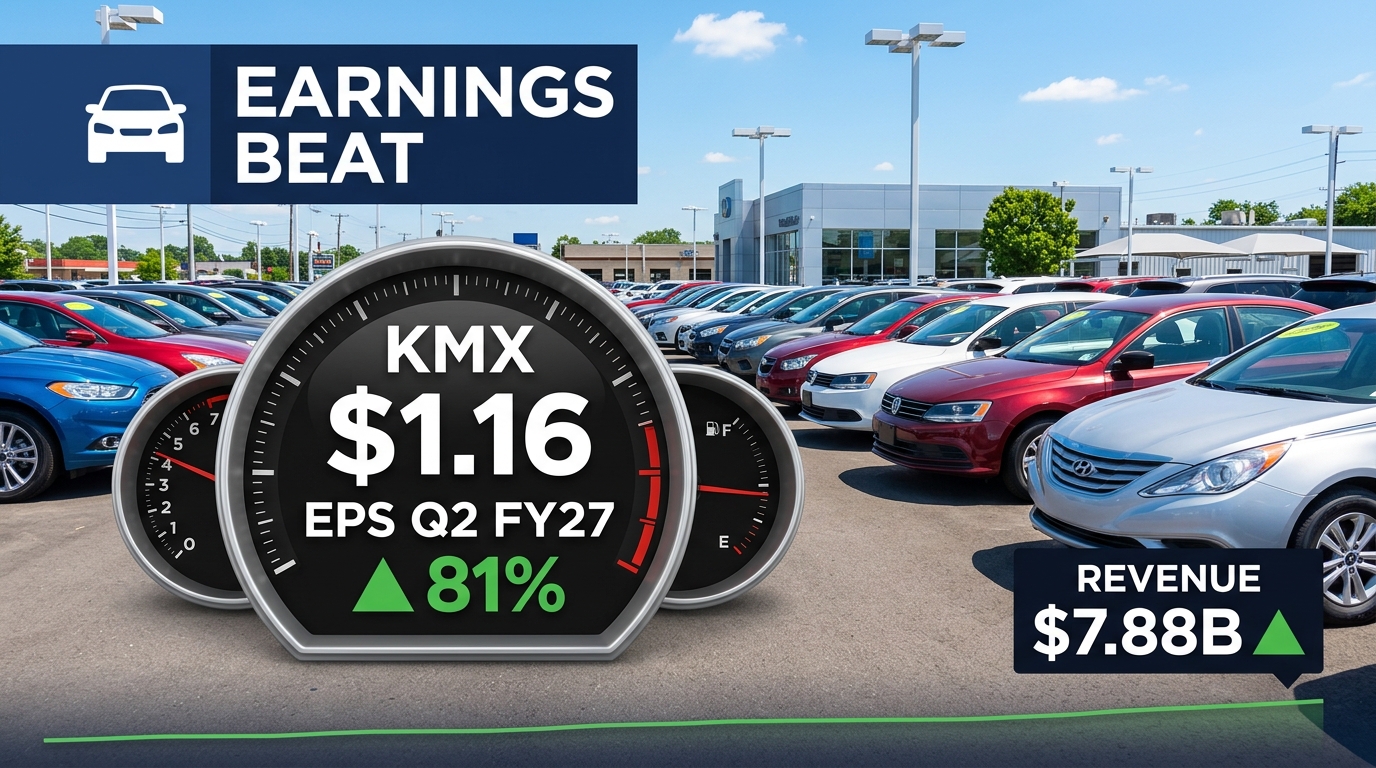
CarMax (NYSE: KMX) delivered a decisive earnings surprise for the second quarter of fiscal 2027, reporting net earnings of $165.3 million, or $1.16 per diluted share, compared with $95.4 million, or $0.64 per share, a year earlier. Analysts polled by FactSet had forecast $0.73 per share. Total net sales and operating revenues rose 19.5% to $7.88 billion, comfortably above the roughly $7.03 billion analysts expected.
Volume did the heavy lifting in the quarter ended August 31. Combined retail and wholesale unit sales reached 387,735, up 14.7% from a year ago. Retail used-vehicle units rose 13.8% to 227,391, with comparable-store used units up 13.0%, while wholesale units climbed 15.9% to 160,344. Gross profit per retail used unit slipped $111 to $2,105 as the company took pricing actions to support volume, though that still topped the $2,022 Wall Street forecast. Wholesale gross profit per unit fell $135 to $858.
The finance arm also helped. CarMax Auto Finance income rose 32.1% to $135.6 million, supported by a lower loan loss provision of $113.4 million and a $16.6 million gain on the sale of auto loans. The year-earlier quarter carried an elevated provision tied to weaker performance of older loan vintages. Because those items contributed to the profit rebound, some analysts caution that the quality of the beat is harder to judge than the headline suggests.
Chief Executive Keith Barr credited execution and early progress on the company's four-pillar Shift into GEAR strategy, which is aimed at strengthening the core business and returning CarMax to sustained growth. Management also said it will resume share repurchases at a modest level in the third quarter after making none in the second, citing improving leverage and continued momentum. The company will host a Strategic Update on November 3.
Shares of CarMax rose roughly 6% to about $59.75 early Tuesday from a prior close of $56.55, and the stock has gained about 8.5% since its June 17 report. Carvana rose about 3% and Lithia Motors gained less than 1% in early trading, a muted sympathy move that suggests investors are treating the print as a company-specific win rather than proof of an industry-wide recovery.
The report matters beyond one stock because used-car retailers are a read-through on consumer credit and big-ticket spending. Higher unit sales alongside a lower loan loss provision suggests borrowers are performing better than a year ago, when the company booked additional provisions for older vintages. Still, the consumer confidence reading due at 10 a.m. ET today, expected near 90, will test whether household sentiment can keep supporting big-ticket purchases.
The macro backdrop is less friendly. The 10-year Treasury yield sits near 5.23% and fuel prices remain elevated, which can pressure auto affordability and financing costs for used-car buyers. With Federal Reserve officials hinting at additional rate hikes, investors may prefer to size positions moderately until store-level margins show steadier footing.
Catalysts ahead include the November 3 strategic update, the pace of third-quarter buybacks, and whether retail gross profit per unit stabilizes after the recent price cuts.