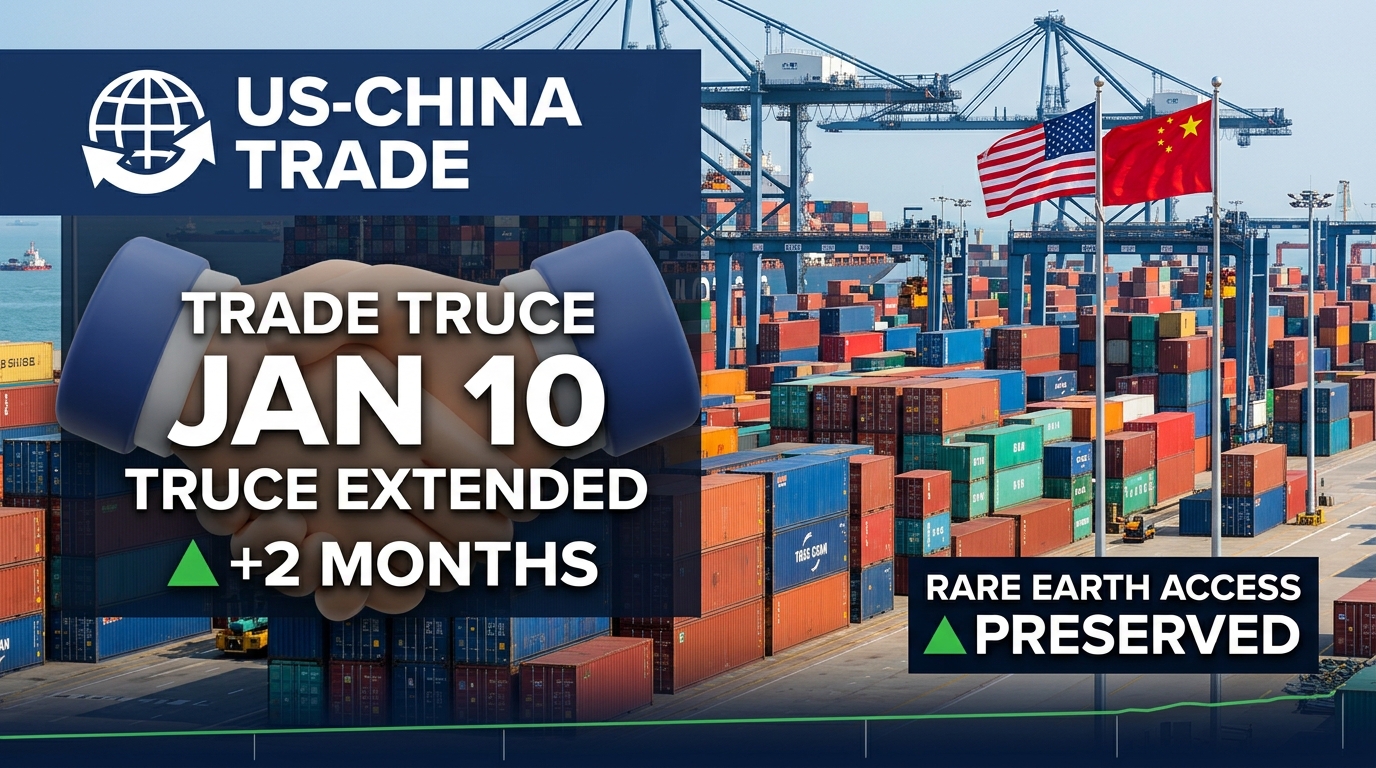
The United States and China agreed to extend their bilateral trade truce by two months, pushing its expiration from Nov. 10 to Jan. 10, U.S. Treasury Secretary Scott Bessent said, as Chinese President Xi Jinping began a state visit to Washington that includes talks with President Donald Trump at the White House on Thursday.
Bessent announced the extension in a television interview on Wednesday after an unscheduled meeting with Chinese Vice Premier He Lifeng, their second meeting in four days. He referred to the arrangement as the Busan Agreement, the economic detente struck when Xi and Trump met in South Korea last October. Under that framework, Washington lowered some tariffs on Chinese goods, while Beijing agreed to pause new rare earth restrictions, resume purchases of U.S. soybeans and take steps to curb fentanyl precursor chemicals.
Bessent said the U.S. side wants China to fulfill additional deliverables and that the two sides met to see whether a bigger deal is possible instead of a series of smaller ones. Chinese state media had not immediately noted his comments, and Beijing has not publicly confirmed the terms. Trump greeted Xi at Joint Base Andrews, a rare gesture that underscores the importance Washington is placing on the first Chinese state visit to the United States in more than a decade.
Trade Representative Jamieson Greer said this week that the countries could agree on lists of goods subject to lower tariffs as part of Trump's Board of Trade initiative. He said the Chinese side would likely offer consumer goods and low-tech items, while U.S. exports could include energy products, agricultural goods and potentially medical devices. Bessent and Greer also announced Sunday that the two governments had proposed exchanging alerts about AI-related hacking incidents, particularly those involving national security.
Analysts offered mixed readings. Scott Kennedy of the Center for Strategic and International Studies said the short extension suggests Washington is unsatisfied with Chinese offers and wants to keep pressure on, with the added benefit of making it more likely Xi attends the G20 summit in Miami in December. Jens Eskelund, president of the European Chamber of Commerce in China, noted that a truce does not address practical hurdles for companies, including the absence of a standardized process for applying for rare earth export licenses.
For markets, the extension removes a looming November cliff and reduces the odds of a sudden tariff escalation that could have added to inflation pressure at a moment when Treasury yields are near multi-decade highs. Sectors most sensitive to U.S.-China trade, including agriculture, energy exporters, industrials and technology hardware supply chains, may see less headline risk, although the short duration of the deal means uncertainty could resurface in January. Investors should also watch whether Thursday's talks yield a broader package, since Bessent has indicated one could still arrive by that deadline.
Additional meetings could follow, including an APEC gathering in Shenzhen in November and the G20 summit in Miami in December. Until then, the truce leaves tariffs lower and rare earth flows intact, but the underlying disputes over trade, technology and national security remain unresolved.